 By admin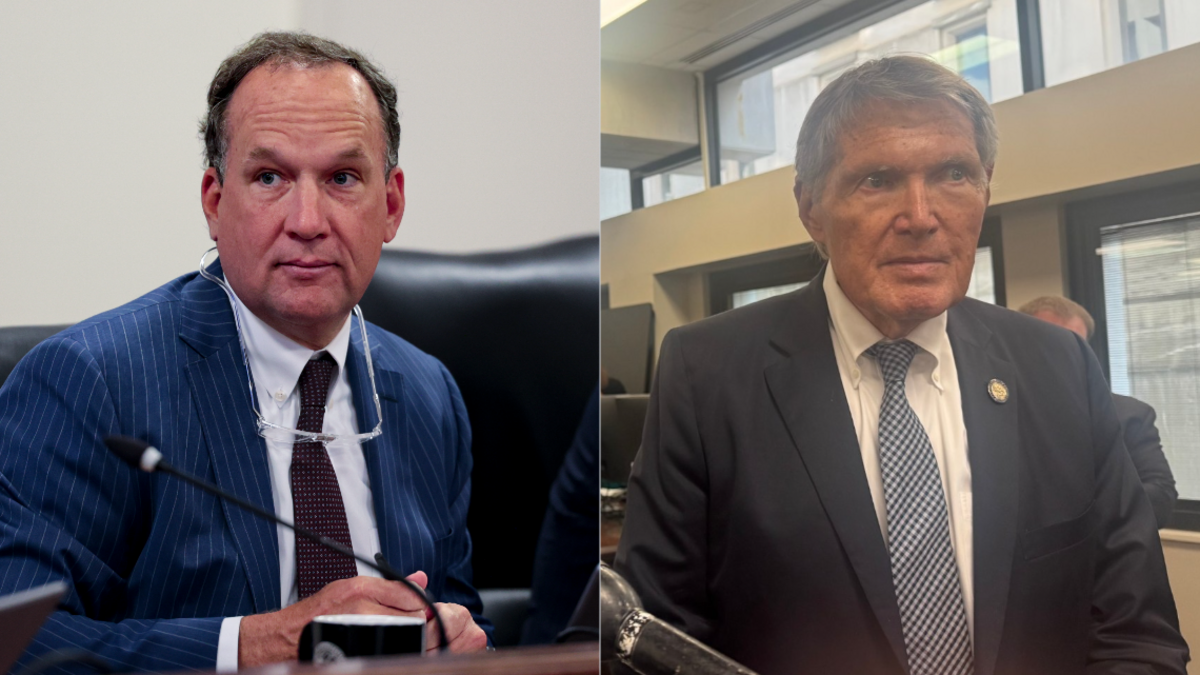
South Carolina lawmakers hoping to bring money back to their districts this year for community investment projects will have to wait a little longer to see if they receive it.
Read more Nearly 100-year-old car involved in deadly crash, South Carolina coroner says
And seniors hoping to see property tax relief, will see some, just not as much as proposed by the state Senate earlier this year.
As part of a roughly $15 billion spending plan, a six-member budget conference committee agreed Wednesday to set aside $377 million into a special fund for a new committee to dole out for projects commonly referred to as earmarks. Money to pay for the $150 million in Scout Motors site preparation cost overruns requested by the Department of Commerce, also would come out of that pot.
Any part of the $377 million that doesn’t get allocated, would be available for distribution next year.
Taking this approach allows the rest of the state’s annual budget to move forward to a vote by both chambers sometime in the next two weeks. The state has been operating under a continuing resolution, which keeps recurring spending levels the same, since July 1.
The proposed six-member “non-recurring review committee” will consider documentation provided by lawmakers for their projects and then recommend to the two chambers which projects should get funded.
The House proposed $315 million worth of earmarks, the Senate $130 million, and the imbalance between the two chambers was a point of contention for those in the upper chamber during budget negotiations.
How the member projects are put in the budget had been a point of contention as well for senators. For several years, the House has revealed their proposals in their second version of the budget, which is used to set up a conference committee.
“We’re looking at different ways to do those community investments that make both the House and Senate comfortable. This is a good exercise of would this kind of model work, and how would it work,” said House Ways and Means Chairman Bruce Bannister.
Recommendations on which community investment projects receive money will need to be made by Sept. 30.
Senate Finance Chairman Harvey Peeler has not been a fan of earmarks but said he likes the idea of a review committee this year and in the future.
“Chairman Banister came with an idea. I think it’s worth trying,” Peeler said.
Money for the estimated $150 million in Scout Motors site preparation overruns also would not be allocated until the completion of a Legislative Audit Council review of the work.
“We wanted to make sure there was a way to address it, so we didn’t get sued (and) we didn’t default on our obligations. The Senate wanted to make sure that they got that LAC audit, knew what had happened before any money could be allocated, and that was just kind of screaming for an agreement,” Bannister said. “I think waiting for that audit is a reasonable way to resolve it.”
Property tax relief
The budget negotiators agreed to set aside $81 million to pay for a property tax cut for seniors. The senior homestead exemption will expand to $75,000 from $50,000.
“That’s really the takeaway from this budget, is we’ll be forced to discuss property tax. I hear a lot about income tax in the state of South Carolina, but I hear more about property tax,” Peeler said.
Read more Missouri sues Kansas City, alleging discrimination against white people and men
Still the tax cut will be done through a proviso, a one-year budget law, so it will need to be passed again next to continue, or permanent legislation needs to be approved. The Senate passed a bill earlier this year to bring the exemption to $150,000, but it never moved in the House.
Because the proviso changes permanent tax law, if a member wants to enforce its rule, the House needs a three-fifths vote to approve the change in the homestead exemption.
“I feel like based on just the conversations with House members so far that they’re going to be in favor of that expansion,” Bannister said.
Other budget agreement highlights
As part of the budget, the two bodies agreed to set aside $32 million to settle the Captain Sam’s Spit case. Peeler was against the idea of agreeing to the settlement, but he came around during the discussion among the conference committee members, which included three lawyers.
But state Sen. Brad Hutto, D-Orangeburg, said a change needs to come with the next attorney general to make sure lawmakers are aware of potential settlement amounts before an agreement is put in place.
“The point is, we kind of felt held hostage by an agreement we had no control over,” Hutto said. “We’re going to get a new attorney general, and when the new attorney general is elected, I think several of us are going to go meet with him and say … When y’all are out there separately resolving lawsuits, you cannot be spending the state’s money. That’s our job.”
The committee also agreed to spend $102.6 million more a year toward Medicaid and $53 million more a year for Medicare premiums for elderly and disabled Medicaid recipients.
The budget also gives the Department of Social Services an additional $34 million a year to help with the administration for the Supplemental Nutrition Assistance Program.
“The SNAP program will continue in South Carolina, and that was another one of those pressing issues. (If) we weren’t able to get a budget and we kept going, there would be a point that South Carolina would lose its SNAP program,” Bannister said.
Each cell on the state’s minimum teacher salary schedule, which sets teacher pay based experience and education level, also goes up by $2,000 and brings the starting pay to $50,500.
The budget also includes a 2% raise for state employees and enough money to make sure those on the state health insurance plan don’t see an increase in their premiums.
The budget also includes $1 million for the governor’s office to help with the transition to the next administration as Gov. Henry McMaster cannot run for reelection this year.
Budget writers also put in about $3.3 million toward expanding the state’s free breakfast program in an effort toward making sure every student could have access to a free breakfast.
“What we’ve done today is agree on what we can agree on,” said state Sen. Tom Davis. “We went ahead and adopted the budget, the spreadsheet. (It was) very important to the Senate that we got the property tax cut, and that’s a down payment toward a larger tax cut next year, and we’ve essentially deferred for another day how we’re going to address the remaining issues of earmarks and Scout (site) payment.”
Read more Burying hot radioactive waste in ‘boreholes’ mentioned in plan for SC nuclear campus