 By admin
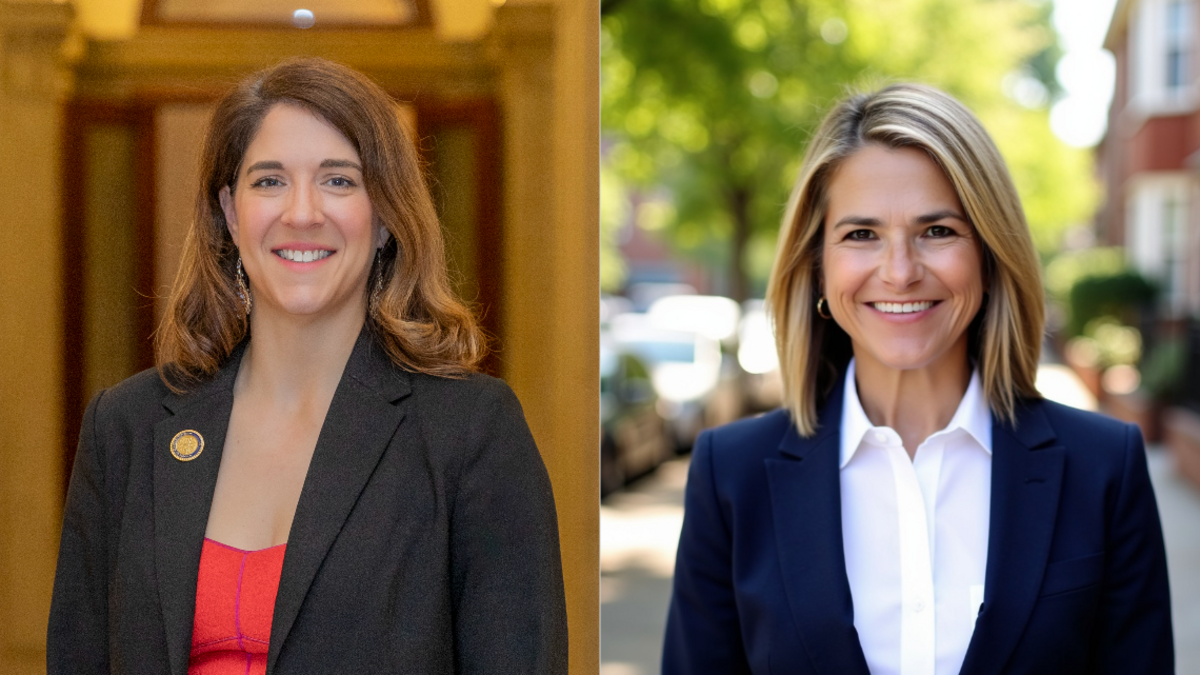
Incumbent state Rep. Heather Bauer, a Democrat, and Republican challenger Tracy Robins are competing to represent the District 75 in the South Carolina state House.
Read more A Columbia favorite for donuts is moving its storefront shop to another town
Libertarian candidate Joshua Park is also running to represent .
Bauer, 42, has served in the House since 2022. She lives in the South Beltline neighborhood in Columbia and works as a client relationship consultant.
Robins, 55, is a retired public school teacher. She lives in Columbia. She was certified to teach history and social sciences.
The State sent questions to Bauer, Parks and Robin about their views on topics like artificial intelligence and tax reform. Both major party candidates responded in emails. Parks did not reply. Responses were edited for length, clarity and style.
Why should people in your district vote for you?
Bauer: I believe good public service requires pragmatism and principle, and most importantly, results. The year I won this seat, I ran on holding my opponent accountable for voting to take the rights of women and girls to choose an abortion. This gives the government too much power over our healthcare and personal freedoms. The district decided to give me a chance.
As a lawmaker, I’ve worked with Republicans to create jobs, conserve public land and bring projects to our district that improve safety and revitalize a core economic corridor. I’ll work with anyone, but I’m also not afraid of a fight. I helped force an incompetent state comptroller from office. I pushed for greater accountability and achievement from our Richland 1 school district, and now we’re making progress. I stopped a money grab by utilities looking to raise your rates. I helped defeat Donald Trump’s partisan gerrymander of South Carolina’s congressional districts. I try my best to do the right thing for the right reason. I’m honored the district has trusted me to serve. I hope you will again.
Robins: I am a hard worker who is deeply engaged in our community, and I believe in practical, results-focused government. I will listen to the people of District 75, continue to build relationships on both sides of the aisle and stay focused on solving the everyday issues that affect our families and neighborhoods.
I am not running to engage in partisan battles. I am running to be a serious legislator who will be laser-focused on the issues that matter here at home. I have walked District 75, knocking on almost 20,000 doors, listening to residents, and learning firsthand what matters to them — the cost of childcare, our public schools, taxes, tort reform, our explosion of growth and other issues.
Representation is about more than simply having a voice — it’s about having the ability to turn that voice into results. If elected, I will have a seat at the table with the governing majority, giving me the opportunity to advocate directly and effectively to deliver tangible results for District 75. My opponent wants to make this election about Donald Trump, but the reality is that the person who can work most effectively with Speaker Murrell Smith, leadership and the Republican supermajority in the House will be best positioned to deliver results for our neighbors.
How should the General Assembly approach tax reform in the state?
Bauer: The legislature should ask: tax reform for whom? I’m in favor of cutting taxes for low- and middle-income earners because 4 out of ten South Carolina households are struggling to meet basic needs like housing, healthcare, food and gas. I’m not in favor of tax handouts to corporations that don’t produce jobs or invest back into our communities. And I’m not in favor of cutting the income tax rate to zero just to say it’s zero.
South Carolina is already the fastest-growing state per capita — we’re not having any trouble attracting growth. Our tax policy should be a serious effort to ensure those who have benefited most from our state’s many resources pay their fair share to ensure we have the public resources to meet future needs.
Robins: Regarding income tax, I support continuing the revenue-triggered reductions enacted in the new individual income tax law. Similar models are used in Mississippi, Oklahoma and West Virginia to lower state income taxes while protecting existing commitments to necessary financial obligations such as schools, roads and healthcare.
As importantly, after listening to thousands of neighbors at their doors, I would advocate to the South Carolina’s General Assembly to use this model to provide homeowners with a property tax rebate. When recurring general fund revenue exceeds a specified benchmark, the General Assembly could dedicate a portion of that excess to a statewide owner-occupied property tax rebate. However, in budgetary years that the state provides this property relief, counties cannot turn around and raise property taxes.
How would you want South Carolina to regulate the growth of new data centers?
Bauer: I’m not anti-data center in all cases. I’m anti-data center when the cost of building and running that data center gets passed along to utility ratepayers with hidden breaks for data centers. If local communities want to allow a data center to be built based on the rules and needs of those communities, I support that so long as ratepayers don’t get stuck with the bill.
Robins: Keep the decision local, but with guardrails. Data centers are welcome in South Carolina only when local governments, with meaningful input from their residents, determine that they are appropriate for their communities. I cannot foresee any location in our district that would qualify for a data center.
Once locally approved, large data centers should go through a coordinated state review and permitting process that examines their impact on the surrounding environment, water supply — including potential effects on neighboring communities — and electricity demand and grid reliability. The review should also address data security and determine who will bear the cost of any new infrastructure required to serve the facility.
Most importantly, existing residents and businesses should not be forced to subsidize the infrastructure or increased utility costs created by a new data center. Any new data center should be required to pay a significant fee to the South Carolina Conservation Bank so that South Carolina can balance technological growth with preserving what makes our state great.
Read more Darline Graham didn’t talk to Trump about Russia sanctions waiver during SC visit
I agree with Gov. Greg Abbott’s proposal for data centers in Texas. His approach requires: all data centers have a closed loop water system, provide their own power source and agree to a certain financial amount that would be given back in property tax relief.
How should population and economic growth be managed in the state and in your district?
Bauer: I believe in a free market with rules. So, no, the government shouldn’t be “managing” the economy or where people choose to move. What the government should be doing is creating a level playing field and enforcing the rules so the free market works efficiently and fairly. In our district, that means ensuring we have strong infrastructure and schools to fuel economic growth. Those are two things I’ve been focused on.
Robins: How we balance economic growth with preserving South Carolina’s best qualities is one of the most important questions we will face in the next 5 to ten years. South Carolina’s growth creates opportunity, but it must be matched with infrastructure and services that protect existing residents’ quality of life.
Currently, South Carolina is one of the fastest-growing states year after year. That means our roads and electric grid will continue to face growing demands. I’ll work with stakeholders to find creative solutions to improve and prioritize the condition of our roads.
On electricity, I differ from my opponent quite a bit. I don’t believe we have the luxury of picking and choosing winners in the energy sector. We need every option on the table to keep prices low and address our heightened, complex energy needs.
Local governments should have the tools to manage growth, and new development should pay for its fair share of infrastructure and public safety costs. We should prioritize redeveloping vacant or already-developed properties before converting forests and undeveloped land, while directing economic development incentives toward lower-growth communities that need jobs and investment.
In terms of population growth, South Carolina needs to deliver for our youngest citizens. On day one, I’ll sponsor a bill to expand South Carolina’s Child Tax Credit and work to expand affordable childcare options. As a former public-school teacher, I’ll fight every day to make sure our students are workforce ready.
What guardrails, if any, would you like to place on emerging technologies, like Flock cameras, AI and social media?
Bauer: I oppose Flock cameras. We should consider banning or restricting them. It gives the government too much surveillance over law-abiding citizens. China has a very robust surveillance state that has largely eliminated free speech in that country. Flock cameras are a first step down that path and I oppose that.
AI is one of the most challenging issues for the government. It promises the possibility of tremendous benefits and harms. Right now, I support aggressive fact-finding in the form of hearings and subpoenas to get the information we need from these companies to have an informed debate and make legislative decisions.
Finally, social media regulation is overdue. I’m proud of the bipartisan legislation we passed to get phones out of schools. I believe social media should be age-gated for children, just like cigarettes or alcohol.
Robins: Technology can make government more efficient and help law enforcement keep our communities safe, but innovation should not come at the expense of our constitutional rights or personal privacy. Local governments, where people have the greatest direct voice, should be allowed to decide whether the benefits of these cameras outweigh the concerns.
For technologies such as Flock cameras , I support clear limits on who can access the information, how it can be used, how long it can be retained, and with whom it can be shared. These systems should be used for legitimate public-safety purposes, not to create an unlimited database of the movements of law-abiding citizens. There should be harsh penalties for those in power who break the public’s trust when using any technology.
For AI, South Carolina should establish transparency and accountability standards when state and local governments use AI to make or assist with decisions affecting citizens. People should know when AI is being used in significant government decisions and should have access to meaningful human review when appropriate.
For social media, I support protecting children from harmful and exploitative practices while also protecting free speech and parental rights. Our goal should be sensible guardrails that allow South Carolina to benefit from new technology without sacrificing privacy, individual liberty, or public accountability.
I agree with the SHASM Act that has already been passed into law that regulates social-media platforms’ treatment for minors, including age verification, parental consent, and restrictions on certain addictive features. I also agree with the App Store Accountability Act, which has currently not passed the House yet.
Some candidates may say it’s the parent’s sole responsibility to control what their child sees on social media, or what they can or cannot download on their smartphones. To that I argue with a different perspective. . I will advocate for legislation, within boundaries, that protect all children of South Carolina.
Read more California pier plans to ban hanging dead sharks. More fishing rules may follow
Responses are listed alphabetically by candidate last name.