 By admin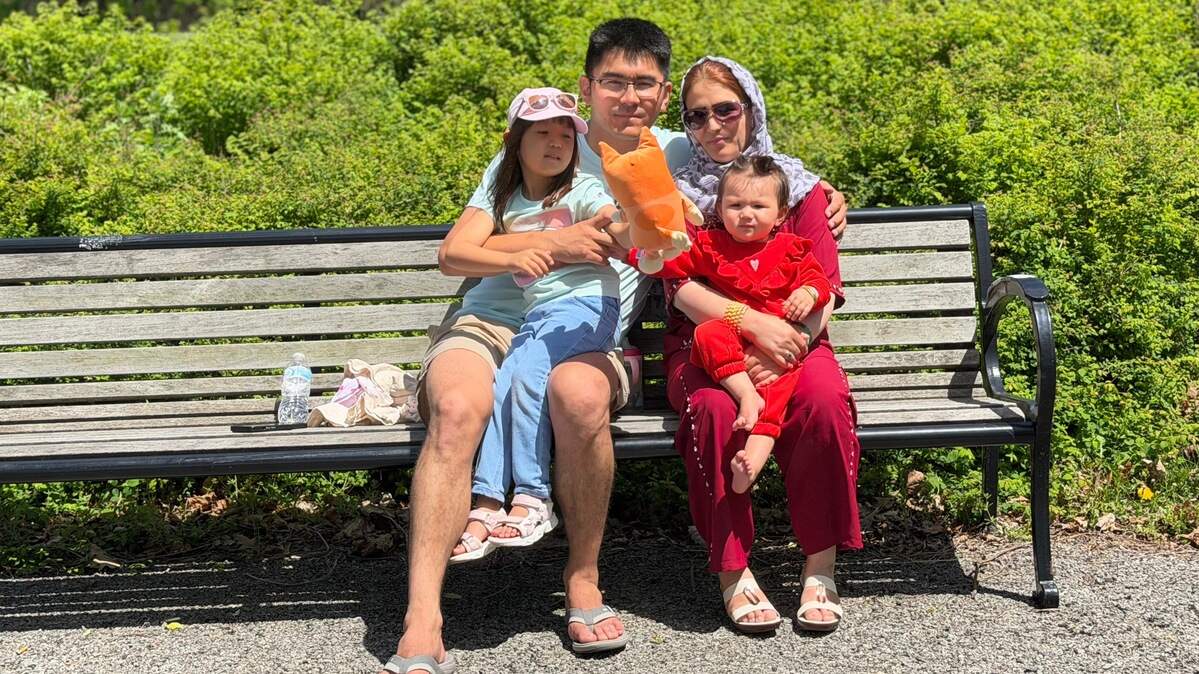
Mohammad “Rahim” Sultani and his family – deemed at high risk for violence under the Taliban – fled Afghanistan for Columbia, South Carolina, in 2023.
Read more US eyes Iranian assets for Gulf allies’ reconstruction, source says
His family, met with the chaos of the U.S. immigration system, has now been thrown another curveball: his youngest daughter, born on American soil, may now be at risk of losing her citizenship.
“We came here to find a piece of life for us and for our family,” Sultani said. “But here again we are facing another problem, hearing that all the basic rights are getting limited to us.”
Sultani has three children, the youngest of whom was born in May 2025. The rest of the family has been awaiting their green cards for more than 18 months and, according to Sultani, received nearly no updates in that time.
As the U.S. Supreme Court weighs the constitutionality of an executive order issued in January 2025, birthright citizenship is teetering on the brink of what could be a life-changing redefinition for South Carolina’s immigrant families.
Under the executive order, the legal concept of birthright citizenship – which was established by the Supreme Court in the late 19th century and includes all people born on U.S. soil – may be redefined to exclude those born to two parents who are not U.S. citizens or “lawful permanent resident[s]”, according to the order.
Refugees like Sultani and his wife are not specifically mentioned in the executive order, as they are neither undocumented or permanent residents until a decision is made on their green cards.
The Supreme Court previously ruled that individual judges did not have the power to halt President Donald Trump’s executive order overturning birthright citizenship, but their final decision is anticipated as early as this month. The order has not yet been implemented as the court deliberates.
It remains unclear, if birthright citizenship is redefined, whether the new definition will apply only to children born after the Supreme Court decision or be used to alter citizenship status of children born after the executive order was issued.
Sultani and his family have been living in uncertainty for the future of their youngest child, born 4 months after Trump issued the order.
“We are kind of worried and stressed because her status, even if it is cancelled, we don’t know what would be her case,” Sultani said. “I have a lot of goals for her. I want her to be successful in her life, and if, in the future, her status becomes a barrier to her success path … we are worried about that.”
Sultani began working as a case manager in 2025 for Lutheran Services Carolinas’ New Americans program, which provides resettlement services to refugees granted asylum. He saw elevated wait times for green cards and citizenship for other families as well as his own, increasing the burden of legal expenses and bureaucratic fees.
“This is another part of the problem that is going to cause us financially to face more difficulties,” Sultani said. “Since all this is getting changed and things are not going well for this immigration process already. It is stressful not only for me, but for all the families who have the same situation.”
Not including children of refugees granted legal asylum, more than 20,000 children in South Carolina are U.S. citizens born to undocumented immigrant parents, according to data published by the National Center for Children in Poverty.
Under the executive order’s definition of citizenship, those children may become stateless and would be ineligible for social services such as Medicaid.
South Carolina opted not to expand Medicaid under the Affordable Care Act in 2013, and has held firm on the decision. Gov. Henry McMaster and statehouse Republicans have said that money used to fund the expansion would be better used in growing infrastructure and the job market.
Refugees granted asylum are exempt from the five-year waiting period required of most immigrants seeking benefits, according to HealthCare.gov.
SC residents support birthright citizenship … for children of legal immigrants
The majority of South Carolina residents support birthright citizenship for children whose parents immigrated legally, according to poll results released by Winthrop University on May 28.
The poll found that 84% of residents supported citizenship for individuals born to parents who immigrated to the U.S. legally, while the number dropped to 45% when discussing individuals born to “illegal parents”. Children born to immigrants with pending status changes were not asked about.
Poll director and Winthrop professor Scott Huffmon said that while immigration is at the forefront of many people’s minds, reactions to the decision on birthright citizenship will likely follow party lines.
The poll had a 2.6% margin of error, was weighted by demographic factors to more accurately reflect the state’s general population and surveyed more than 1,400 SC residents online from April 29 to May 12.
Read more Kosovo holds another snap election as political crisis drags on
“The topic as a whole is in the forefront of people’s minds much more than it was,” Huffmon said. “Attitudes won’t change, just the ammunition and the target they’re shooting at it will.”
South Carolina Attorney General Alan Wilson joined 20 other state attorneys general in filing a brief defending Trump’s executive order with the Supreme Court in 2025.
“This is an opportunity for the Supreme Court to correct this long-standing misinterpretation,” Wilson said in a March 2025 statement. “The Citizenship Clause was never meant to reward illegal immigration or birth tourism. This order realigns the 14th Amendment with its original intent and ensures that American citizenship is protected for those who have a rightful claim.”
65-year-old Tim Austin, a retired auto industry manager living in Spartanburg, hopes the Supreme Court takes action to reign in how the 14th Amendment is interpreted.
“I pray that they will put up some guardrails,” Austin said. “What you don’t want is having parents that have no allegiance to this country having an ulterior motive for having their children born here.”
Austin said one of his main concerns with birthright citizenship as it stands now is birth tourism, a phenomenon where foreign-born women travel to give birth in the United States, so those children will be American citizens. .
Austin believes children born to legal immigrants and refugees should be granted citizenship, but opposes birthright citizenship for children of the undocumented.
“If you’re here legally in this country, and you intend to stay in this country on a path for the parents to be citizens, then I’m totally fine with the children being citizens,” Austin said. “If you’re here illegally, you shouldn’t be. This whole loophole with the 14th Amendment is being misused.”
Organizations that represent and support immigrant families, some already straining from cuts to funding, could see a spike of thousands more individuals seeking assistance if Trump’s 2025 executive order takes effect.
The New Americans program, which serves people in both North and South Carolina, has faced significant challenges since Trump took office in January 2025, as funding cuts and loss of federal contracts led to layoffs of over 40% of their workforce. For the South Carolina office, the staff was reduced from almost 80 to just under 50 employees, according to state program director Seth Hershberger.
“It hurts our services,” Hershberger said. “Unfortunately, we have to kind of scale back and just do the most important services and prioritize what’s going to be most important for our clients.”
The amount of refugees coming into the state has slowed, but the organization still provides services for five years to all participants.
A ruling against birthright citizenship would mean U.S. born children of refugee parents – who have a legal pathway to a green card after one year in the country – are at risk of no longer having access the public benefits afforded to American citizens, a major source of stress for families, according to Hershberger.
“It creates a lot of fear in the refugee community,” he said. “If your child is born on U.S. soil and becomes a U.S. citizen, then at least their future is more secure.”
The financial burden of further legal battles may also put additional pressure on immigrant families. They would have to pay lawyer’s fees to adjust their child’s citizenship status as well as their own, a bumpy legal road which Hershberger says has been complicated by wait times more than doubling in the past year.
“All of a sudden you have this burden of thousands more dollars just to help your child adjust status to get a green card, and eventually to get citizenship,” Hershberger said.
SC Appleseed Legal Justice attorney Adam Protheroe, who often represents low-income South Carolinians of varying immigration status, emphasized that relying on legal precedent would be crucial to the decision.
“In terms of like how foundational and how kind of long-standing this principle is, I would like to think that it would be pretty much off the table to change,” Protheroe said. “But again, the concept of precedent has been a little bit more fluid lately.”
Protheroe says the decision could have impact for generations to come.
“You’ll end up with an entire underclass of children who lose access to things like health care and food assistance, and that has a compounding effect down the line,” Protheroe said. “You can’t really deter a baby to be born somewhere else.”
Read more Beach hazards statement for Myrtle Beach area and Coastal Georgetown until Sunday evening