 By admin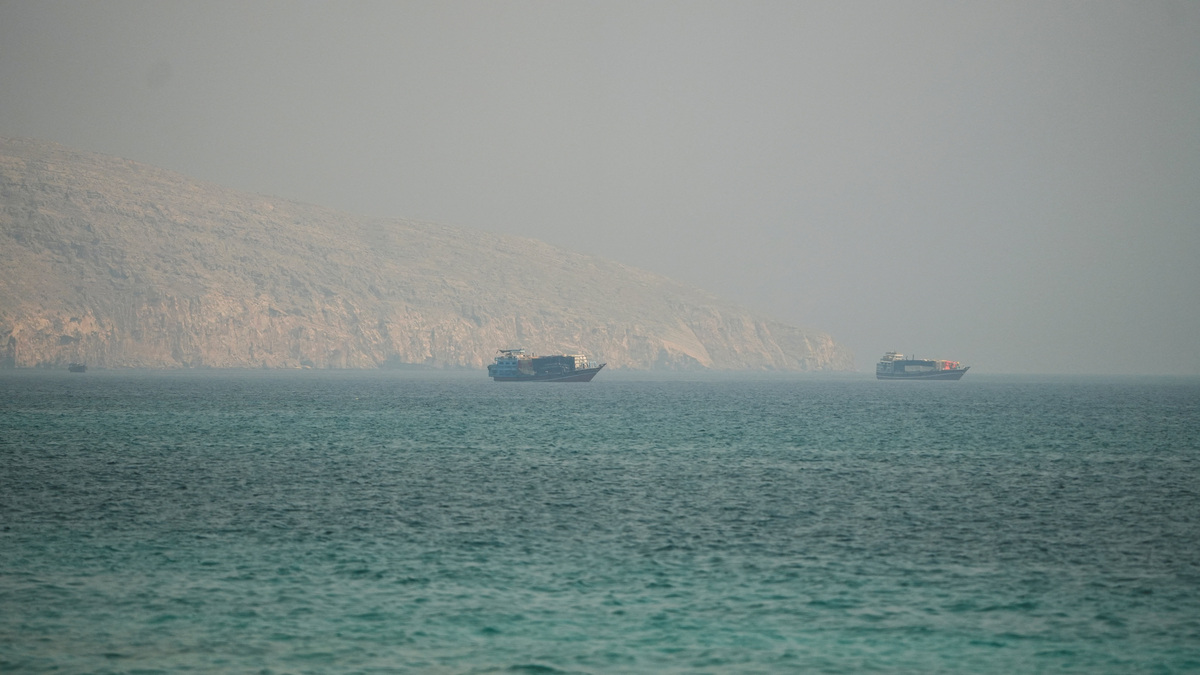
WASHINGTON/DUBAI – U.S. and Iranian forces exchanged heavy missile and drone assaults with Tehran targeting U.S. facilities in states across the Gulf on Sunday and saying it had again closed the vital Strait of Hormuz.
Read more Former Qatar ruler Sheikh Hamad, a moderniser who seized power, has died
A series of attacks between the U.S. and Iran over the past several days led President Donald Trump to declare the end of a ceasefire meant to halt the fighting that the U.S. and Israel began on February 28, though Trump has left the door open to continued negotiations.
The escalation followed several attacks on commercial ships in the area. Iran said it had closed the strait after firing a warning shot that struck a vessel traveling on an unapproved route, and said on Sunday it had disabled a second vessel.
The strait will remain closed until “the end of U.S. interference in this region,” Iran’s Revolutionary Guards said.
U.S. Central Command, however, said commercial vessels continue to transit through the waterway that carried one-fifth of the world’s oil and LNG shipments before the war.
IRAN ESCALATES PACE, EXPANDS TARGETS OF ATTACKS
Central Command said U.S. forces hit 140 Iranian military targets on Saturday, out of more than 300 during three nights of strikes “to degrade Iran’s ability to attack civilian mariners and commercial vessels freely transiting the strait.”
Iranian state media reported explosions in a number of port cities.
In response, the Guards said they had destroyed a command and control center and drone hangars at U.S. ally Jordan, targeted a U.S. radar site in Kuwait, attacked U.S. aircraft carrier support and refueling platforms in Oman and destroyed a jet maintenance centre and command facility in Qatar.
Qatar’s government said three people, including a child, had been injured by falling shrapnel from the attack.
The United Arab Emirates said its defense systems engaged missiles and drones from Iran, while warning sirens sounded in Bahrain and explosions were heard in Doha. The UAE’s National Emergency Crisis and Disaster Management Authority later said that missile threats detected earlier in the day were outside the country’s borders.
Three missiles from Iranian territory landed in Jordan early on Sunday, causing minor material damage and no casualties, Jordan’s state news agency reported.
Sites in Oman’s Musandam region were targeted with drones on Sunday, its state news agency reported, without saying if there were any casualties.
One Indian national is missing after an attack on the commercial vessel GFS Galaxy off the coast of Oman earlier on Sunday, the Indian Ministry of External Affairs said. “Of the 11 Indian nationals on board, 10 have been rescued so far, while one Indian National is reportedly missing,” the ministry said, while condemning the attack.
Tehran’s strikes marked a sharp escalation in pace and targets, after it had warned that any retaliation over the container ship incident would be met with a “severe response.”
In recent weeks, Iran had hit Kuwait and Bahrain while avoiding Qatar since early April and the UAE since early May.
Read more Columbia lawyer gets nearly $2m for Hunter Biden in defamation suit
Sunday’s attack on Qatar targeted a state whose mediation efforts have been central to attempts to broker a ceasefire between the U.S. and Iran – and Doha has previously said it would not act as a mediator so long as it was under attack.
The war has destabilized the Gulf, while Iran’s effective blockade of the strait has caused energy prices to surge, fuelling global inflation.
Higher prices, especially for gasoline, are politically sensitive for Trump ahead of November congressional elections.
‘KEEP YOUR WORD OR PAY THE PRICE,’ IRAN SAYS
The latest flare-up cast further doubt over the future of an interim U.S.-Iranian agreement signed last month with the aim of ending the war.
On Sunday, Iran’s top negotiator Mohammad Baqer Qalibaf posted on X: “The era of one-sided deals is OVER. We told you: keep your word or pay the price. Reality is knocking.”
The U.S. revoked the license authorizing the sale of Iranian crude on Tuesday after Qatari and Saudi commercial tankers came under fire earlier in the week, prompting a series of tit-for-tat U.S and Iranian strikes.
While Iran has not claimed responsibility for the earlier ship attacks, analysts say Tehran uses such actions to gain leverage in negotiations.
Iran’s Foreign Minister Abbas Araqchi discussed regional developments in a phone call with Pakistani Foreign Minister Ishaq Dar, whose country has been a key mediator seeking to resolve the conflict between the U.S. and Iran, Iran’s semi-official Tasnim news agency reported.
The latest round of hostilities came after talks on Saturday between Araqchi and Omani Foreign Minister Badr Albusaidi in Oman.
The talks aimed at coordinating arrangements for shipping and transit in the Strait of Hormuz, Iranian foreign ministry spokesperson Esmail Baqaei said on Sunday. Legal and technical delegations from both countries discussed maritime security and safety, and agreed to continue political and technical-legal talks to reach a joint understanding, with a Qatari delegation also present, he said.
Oman’s state news agency reported on Saturday that negotiators would continue talks “at the technical and political levels.”
A written statement from Iran’s new supreme leader, Ayatollah Mojtaba Khamenei, on Saturday threatened vengeance for the death of his predecessor and father, who was killed in the war’s initial attacks.
Iran’s new leader has not been seen in public since the war began.
(Reporting by Steve Holland and Phil Stewart in Washington, Parisa Hafezi in Dubai and Yomna Ehab in Cairo; Additional reporting by Enas Alashray, Ahmed Elimam, Eman Abouhassira and Andrew Mills; Writing by Alexandra Alper and Kim Coghill; Editing by Sergio Non, Cynthia Osterman and William Mallard)
Read more Lindsey Graham, 71, South Carolina senator, dies after short illness
Copyright Reuters or USA Today Network via Reuters Connect.