 By admin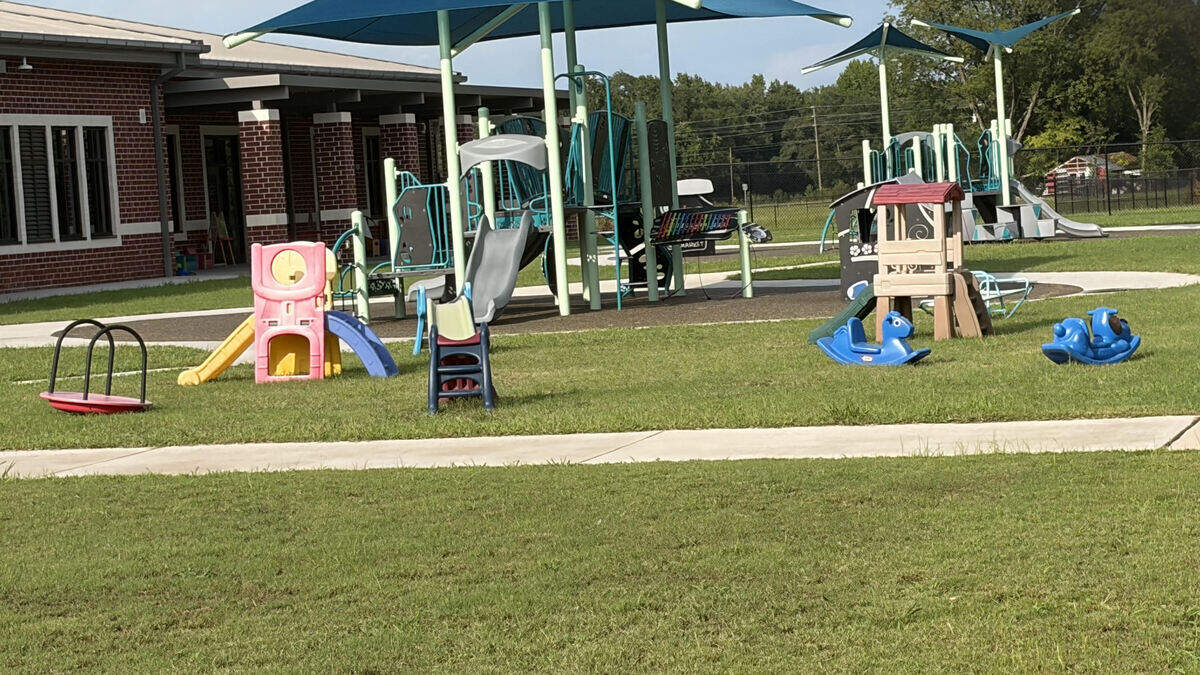
An eastern South Carolina school district has turned down a request to let Yale University researchers test the soil at an elementary school to determine whether unsafe levels of pollution exist in the dirt.
Read more SC school district won’t let Yale University test playgrounds for toxic chemicals
The Darlington County School District says a state agency has already tested the soil of playgrounds and determined that children are safe, even though state officials recently found chemicals in the dirt.
But the request to allow Yale to check the soil at Black Creek Elementary School could have verified those findings — or let people know whether a greater problem exists than first discovered, critics said this week.
Researchers from Yale already are testing the soil of farmland in Darlington County to determine if toxic forever chemicals exist in the earth where crops are grown. They’re expected in the area the week of August 17.
“This was free testing by an independent group that had nothing to gain,’’ said Brady Hill, a County Council candidate and septic tank installer who is pushing for more testing. Hill asked the district to allow the testing by Yale.
‘It was a great opportunity,’’ he continued. “I think the (school district) made a mistake. They could have verified what had been done, or if things were found the other way, it is going to protect the district from future potential lawsuits.’’
The issue revolves around the application of industrial sludge on farmland from the early 1990s to 2013 in Darlington and adjacent counties for use as fertilizer. The land on which the school was built once was a farm field where sludge was applied, records show.
The use of sludge from the Galey and Lord textile factory had been initially encouraged by state and federal agencies as a way to get rid of waste while enriching the soil and crops on farmers’ land. But it was later found to contain industrial toxins, including forever chemicals, a set of compounds of growing concern that can cause cancer. In addition to cancer, forever chemicals can cause immune system deficiencies, thyroid problems and other ailments.
Previous tests by government agencies and Yale researchers have found that some agricultural land, crops and drinking water in the area near sludge fields are polluted with forever chemicals like those embedded in the toxic gunk spread on land decades ago.
Yale researcher Jake Thompson said the university would have gladly tested the soil at Black Creek Elementary, but it can’t do that without district permission.
“We would do it at no cost,’’ Thompson said. “It’s minimally invasive.’’ He said state or local officials could “point out where the sludge was spread and where they wanted to test, and I could get those samples.’’
He said it’s possible the university’s test results would not be any different than what the Department of Environmental Services found while testing the school grounds earlier this year. But it’s worth taking a look, he said.
Researchers at Yale are among scientists at the forefront of studying how PFAS affects land and people’s health in the United States. Thompson is an environmental engineer with the university’s Center for Natural Carbon Capture. He’s putting together a report on his findings of PFAS on the landscape as part of an effort to develop solutions to the problem.
In South Carolina, testing done by the Department of Environmental Services found the amounts of some forever chemicals exceeded certain federal levels, but officials said follow-up risk assessment reports by the state and federal government determined there was no cause for immediate concern. The state agency did advise the district to take steps to cover the playground, as a precaution.
Audrey Childers, a spokeswoman for the Darlington County School District, said there is no need to test anymore at Black Creek Elementary. The school property is safe and scientists don’t need to “disrupt the school,’’ she said. She said all the raw data compiled by state and federal agencies on the property is online and available for public inspection.
Read more Mandatory retirement age for SC judges to increase under bill headed to governor
“We are focused on the business at hand, which is educating these students to the best of our ability,’’ Childers said. An email she sent Tuesday to Hill said “DES and EPA determined that the findings do not present a risk to students or staff.’’
The district’s decision not to give Yale access to test the soil comes as some parents are raising concerns about the possible danger of forever chemicals to students. Some interviewed by The State say they’d like to hear more from the school district.
Danah McPhail, who pulled her children out of Black Creek Elementary because of contamination concerns, questioned whether the district wants to keep information at a minimum in hopes that the issue will go away.
“I feel like they knew about this when they built the school; they don’t want further testing,’’ said McPhail, who has been vocal on social media with her concerns.
Black Creek Elementary School, which has about 700 students, opened in the fall of 2025.
The district paid $1.6 million in 2022 for the land where the school was built, several years after federal officials raised concerns about forever chemicals in farmland from the Galey and Lord plant.
But a consultant it hired to check for contamination did not identify unsafe forever chemicals on the property, The State newspaper reported earlier this year.
The State newspaper, consultants for a Chesterfield County property owner and a local farmer determined last spring that Galey and Lord sludge had been spread on the land where the school was built. The finding was based on state land application records for the Galey and Lord sludge. The Department of Environmental Services acknowledged in March that 91 tons of the company’s sludge were spread on part of the future school property on three different occasions: 1998, 2001 and 2006.
Galey and Lord’s impact on farmland in Darlington County, a mostly rural area about 80 miles east of Columbia, is a major concern. The Department of Health and Environmental Control, the forerunner of the Department of Environmental Services, approved spreading Galey and Lord sludge on more than 300 farm fields on about 10,000 acres from early 1990s to 2013.
Yale’s testing has found forever chemical pollution in the dirt of about 15 farm fields, as well as in some of the crops farmers grow, including collards people eat and hay eaten by cows that are later sold for beef.
Previously, the U.S. Environmental Protection Agency and DHEC documented elevated levels of forever chemicals in the soil of three farm fields, including one across the street from a group of families whose wells were contaminated with forever chemicals like those contained in Galey and Lord sludge.
Galey and Lord, which is in Society Hill about 15 miles from Darlington in South Carolina’s Pee Dee region, is an abandoned plant that closed in 2016 Today, its owners are gone and the site is so polluted the federal government has declared it a Superfund site, making Galey and Lord a priority nationally for cleanup. The U.S. EPA is considering expanding the Superfund area to include farmfields.
Farmer Robbie O’Neal, perhaps the most outspoken person in Darlington County about the problem, said he’s disappointed in the school district’s decision not to allow Yale to test at Black Creek Elementary for forever chemicals, formally known as PFAS. Soil, some crops and wells on the O’Neal farm have shown PFAS contamination.
“I’m really upset about it,’’ O’Neal said, noting that the school district “should do this testing to make sure the children are protected. They made the decision not to. They can change their mind if they want to.’’
Read more How did Richland, Lexington school districts stack up on state assessments?