 By admin
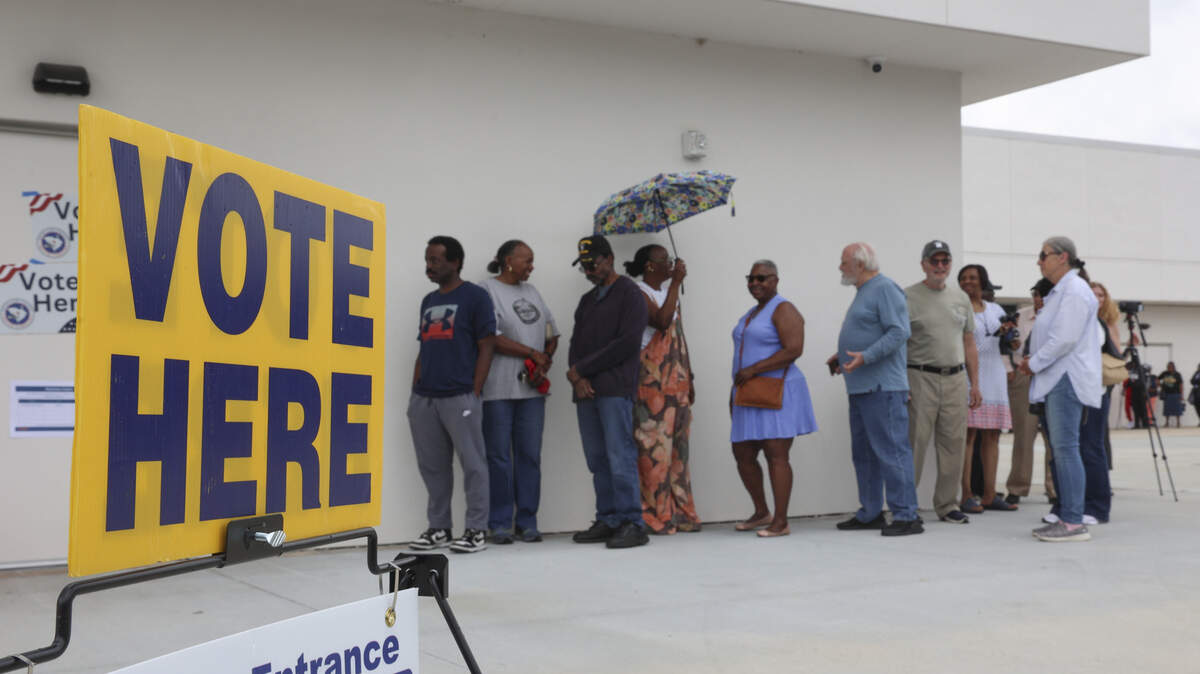
Candidates for state House and Congress were sent questionnaires by The State newspaper’s candidate questionnaires, however, not all candidates responded.
Read more Decomposing body discovered in South Carolina field by workers, coroner says
Voting is already underway for this year’s general election. Early voting runs through Oct. 31 and Election Day is Nov. 3. Here are responses to questionnaires received by The State where a candidate’s opponent did not respond.
House District 69
Candidate: Chris Wooten
Party: Republican
Age: 58
Occupation: Light construction, remodeling
County of residence: Lexington
What guardrails, if any, would you want to place on emerging technologies, such as Flock cameras, artificial intelligence and social media?
Obviously, I think the strongest approach for the AI generated technology is to try to protect privacy and individual rights, but still allow law enforcement, schools, and businesses to use this technology effectively. Flock cameras are a crucial part of public safety and criminal investigations, but do not need to be used for individual surveillance of the general public, so we must identify those boundaries and enforce them. Furthermore, if we find someone abusing this technology, we must hold them accountable. Just this past session, I sponsored the revenge porn law that passed to protect our children and families from the sharing of illicit images and co-sponsored the sextortion bill.
How should the General Assembly approach tax reform in the state?
The General Assembly should approach tax reform exactly the way we are currently doing it; responsibly, without replacing it with other taxes or hidden “fees.” We have dropped the income tax rate from over 7% down to 5.21% in just a short amount of time, and there will be more coming (again, without creating another tax to take its place). We have also increased the homestead exemption for older adults by 50% just this year. Although none of us want to pay taxes, and especially more taxes, if we continue to reform and lessen the burden at a responsible pace, we can still provide all of our essential services and make sure our first responders are paid well to do it.
How should population and economic growth be managed in the state and in your district?
With our state and especially Lexington County still growing at a record pace, we must make sure that we are ready for the next generation. Infrastructure is in high demand, and with this growth, if done responsibly, we can use that new revenue base to fund infrastructure, schools and public safety. But we can not wait any longer, and work is underway to ensure this happens.
How would you want to regulate the growth of new data centers?
We must treat data centers just like other major infrastructure. We need to allow investment and innovation, but make sure the cost and risk are addressed and the developer is responsible rather than shifting it to the taxpayer. We need appropriate zoning, proper setbacks, and, obviously, grid responsibility by the center to ensure that the citizens aren’t being affected or paying the bills. We also need to ensure water and environmental surety before we institute any deal.
Why should people vote for you?
People should vote for me because experience truly matters. You need to know what you are talking about and how it affects families before you vote or make a decision. Lots of people have “what they think” are great ideas. But if you’ve never signed the front of a paycheck, raised a child, or served in the military, it’s hard to understand what’s at stake when making decisions. I have served as a U.S. Marine, a state trooper, a small business owner and a dad. My voting record shows that I am a common-sense conservative who doesn’t do bumper-sticker politics with an issue just because it sounds like a good slogan. I serve as chairman of the regulatory review committee, ensuring we cut regulations on our business owners so they can go to work and earn a living without the government on their back. I also serve as the chairman of the criminal justice oversight committee. I firmly believe public safety is one of our biggest duties and concerns for our citizens. I have always been, and always will be, easily accessible to my constituents and available at all times for the needs of the citizens of District 69.
House District 87
Candidate: Reid Beaman
Party: Democratic
Age: 36
Occupation: Comic Book Artist
County of residence: Lexington
What guardrails, if any, would you want to place on emerging technologies, such as Flock cameras, artificial intelligence and social media?
I’d say let’s put up all the guardrails before we open a Pandora’s box of trouble for ourselves here in South Carolina. We need environmental impact studies done on our water supply and the ecosystem in general before we agree to build any data centers for AI. We also need studies on how AI impacts how our kids learn and psychologically develop, and how qualified and prepared they would actually be entering the workforce if AI becomes integrated into their daily lives, especially at school. We have to do the work now so that in the next five years, we don’t regret our decisions, destroy our state’s beauty, and sell out the next generation. We also need guardrails for Flock cameras to ensure that they are not used for personal gain or malice. They have the potential to do more harm than good, and we don’t need to live in even more of a surveillance state than we already do. We need to strike a balance between our rights and freedom, and our safety.
How should the General Assembly approach tax reform in the state?
It needs to be done carefully and we must take into consideration the cost and financial hardships that every citizen in South Carolina is currently facing. No matter how we decide to do tax reform, we need more transparency at the State House about where that money is going and who’s benefiting from it. It’s time we show the receipts for all to see, and if the State House truly works for the people, then there shouldn’t be any issues with doing that.
How should population and economic growth be managed in the state and in your district?
District 87 is facing crumbling roads, over-crowded schools and an unchecked developmental growth boom. I plan to improve them by working across the aisle with my other state House representatives to implement a new plan for county-wide road improvement, limiting the number of students per classroom, and building more schools in the district; and keeping the housing development boom in check so that our infrastructure is being kept up with the demand placed on it.
How would you want to regulate the growth of new data centers?
We need environmental impact studies on our water supply and power grid structure to see if it could even handle the load, and we need to make sure it doesn’t end up costing taxpayers not only their hard-earned money, but their lives. Every year South Carolina gets hotter and drier. Those data centers will suck up more water than we have and it’ll produce hotter, polluted air that we definitely don’t need. Plus, I don’t know about anyone else, but I like going outside and hearing the birds, and I definitely don’t want to hear the 24-hour constant noise from a data center.
Why should people vote for you?
I’ve been doing the hard work and trying to contact every single person in my district and listening to what they actually need done. I’ve spoken with parents concerned about overcrowded classrooms; single mothers burdened by high insurance rates; life-long residents’ concerns that out-of-towners are making their lives more expensive; farmers worried about rapid developers buying their land up when the crops fail this summer; teachers working a second job outside the classroom to help feed their kids and it ain’t enough. All those conversations are shaping my priorities on what I can do to help them when I make it inside the state House. That kind of community engagement matters to me, and it’s something I’ll continue if I’m elected or not. Public service is about showing up, listening and voting for what’s in the best interest of your community, not your own agenda.
Read more How much did SC’s Darline Graham pay in income tax before joining the Senate?
6th Congressional District
Candidate: Jim Clyburn
Party: Democrat
Age: 86
Occupation: Member of Congress
County of residence: Orangeburg
What guardrails, if any, should the federal government put on the growth of artificial intelligence?
I am the ranking member, hopefully soon-to-be chair, of the House Appropriations Subcommittee that funds the Department of Transportation. We fund, and have oversight authority, over the Federal Aviation Administration, which must approve new airplane models, and the National Transportation Safety Board, that investigates all aviation accidents. We are obliged to keep abreast of their successes and failures and make the necessary safety fixes. I’m also a member of the subcommittee that funds the National Nuclear Security Administration and the Nuclear Regulatory Commission. They ensure the safety of nuclear technology.
Aviation and nuclear technology have important benefits and significant safety risks. Artificial intelligence seems comparable. We should develop an analogous regulatory structure for AI so that it can be harnessed and targeted for the public good without compromising public safety and national security. We must ensure that it never becomes possible for this technology to escape human control and that there will always be a “kill switch” to stop any system that threatens harm. Also, Congress should enlist and empower expert public servants to regulate these powerful products in the public interest and use our oversight authority to monitor the resulting system and procedures.
What authority should Congress exert on starting or continuing an international military conflict?
When (President) Donald Trump started this ill-advised war with Iran, I released a statement that began: “The Constitution gives Congress the power to declare war for a reason: to ensure that such a consequential decision is made only after full consideration by the people’s representatives of the case for military action, the plan for success, the potential costs, and any alternative options.”
Three days later, explaining my vote for a War Powers Resolution to stop the war, I said, “I believe the Constitution gives the power to declare war to Congress to avoid precisely this scenario: a misguided president putting American lives at risk in a military conflict without a clear national security justification and without a coherent plan to achieve a successful outcome.”
I take no pleasure that these concerns have been borne out. Congress must now seek to bring an end to this war by expanding support for a War Powers Resolution, by conducting serious oversight of the war’s course and of the administration’s strategy moving forward, and by using the power of the purse to require that this debacle be brought to a close in a manner that best recover the interests of the American people.
How should Congress address ongoing affordability issues?
We must undo the harm inflicted in recent years by Trump and congressional Republicans: eliminate the Trump tariffs; reverse the cuts to Medicaid and nutrition assistance; reinstate the enhanced ACA tax credits for health insurance and the Broadband Affordable Connectivity Program; and end the war with Iran.
But we need to do much more. As the highest-ranking Democrat on the House Appropriations Subcommittee that funds transportation and housing programs, I will fight to make transportation more accessible, the cost of housing more affordable and the agencies responsible for implementation of these policies more accountable.
In addition to lowering the cost of housing by expanding supply, we must make similar efforts in other key areas. We must stop the Trump Administration from blocking new energy projects and pass an agreement on permitting reform. We must expand access to health care in underserved communities and make child-care more affordable. We should expand, and make permanent, my 10-20-30 funding formula that targets federal funds into communities the Census Bureau has determined to be suffering from persistent poverty.
Finally, we should create conditions for lower interest rates on everything from home mortgages to car and business loans by lowering our deficits and debt.
How should Congress address federal government spending (debt, deficit, social security, Medicare)?
Federal deficits and the national debt are at record highs, resulting in higher interest rates. Without a policy change the situation will only get worse. We must reverse the Republican tax giveaways to wealthy citizens and big corporations and establish a more equitable federal tax table. The so-called “Big Beautiful Bill” cuts taxes for the wealthiest 10 percent of Americans by more than $2 trillion.
People making over $500,000 a year are getting a tax cut of nearly $50,000 this year alone. We must also resist Republican schemes to force everyday Americans to bear the cost of these tax giveaways and make clear our opposition to cutting Social Security and Medicare.
The Social Security Trust Fund is projected to be depleted by the end of 2032, cutting benefits by 22 percent across the board. We cannot let this happen or allow the situation to be used as an excuse to cut benefits for those who rely on them. The following steps should be taken soon; (1) raise the current $184,500 payroll tax cap; (2) expand the Earned Income Tax Credits and (3) establish a select committee to develop and establish a permanent fix.
Read more Trump urges Kansas to reelect Marshall in rally interrupted by protests