 By admin
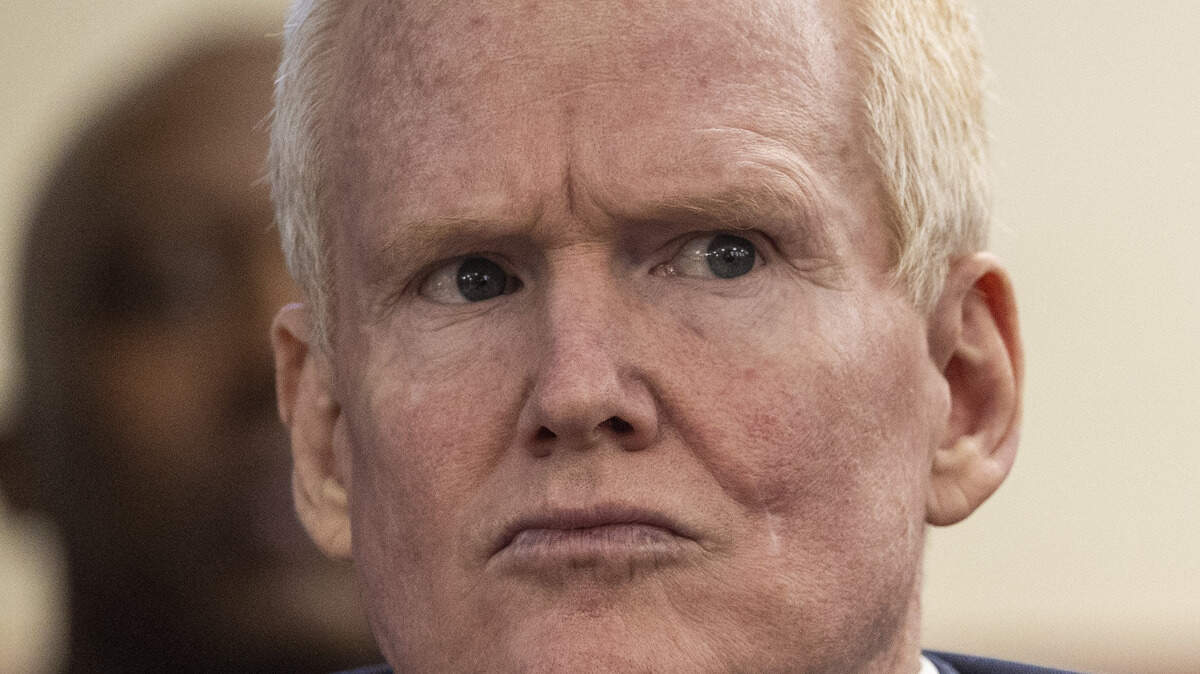
A circuit could judge ruled Friday afternoon that the original grand jury murder indictments for Alex Murdaugh’s second trial are, though faulty in some respects, good enough for his second trial.
Read more The Blotter: Buried baby, Moïse trial, Combs freed after 26 years
“The court concludes that Defendant (Murdaugh) has not established intentional prosecutorial or investigative misconduct that compromised the integrity of the grand jury proceedings,” wrote Judge Debra McCaslin in an 11-page order denying a request by Murdaugh’s attorneys to dismiss the indictments.
Murdaugh’s attorneys did not demonstrate that statements made to the grand jury by a law officer “substantially influenced the grand jury’s decision to indict or created grave doubt that the decision was free from such influence,” McCaslin wrote.
Murdaugh’s attorneys had asked McCaslin to dismiss the indictments and require prosecutors to seek new ones. Prosecutors opposed the request.
Even if the challenged evidence were excluded from the case, other evidence presented by prosecutors “overwhelmingly established probable cause” to go to trial, McCaslin wrote.
Lead defense attorney Dick Harpootlian declined comment later Friday.
Blood spatter
In recent court filings and at a Nov. 13 hearing, Murdaugh’s defense attorneys had argued that the 2022 Colleton County indictments charging him with murder were fatally flawed for numerous alleged reasons including that a law enforcement officer gave false testimony to the grand jury about blood spatter from his victims being found on Murdaugh’s shirt.
Defense attorneys asked McCaslin to throw out those indictments and require prosecutors to seek new indictments based on other evidence.
“What we’re asking for is a reboot. Go back to Square One,” defense attorney Jim Griffin told McCaslin on Nov. 13.
The indictments charged Murdaugh with fatally shooting his wife Maggie and son Paul at the family 1,700-acre estate in rural Colleton County on June 7, 2021. Murdaugh was found guilty of the murders at a 2023 trial. In May, the S.C. Supreme Court unanimously overturned the verdicts, citing jury tampering by the former county clerk of court.
Blood spatter is an important part of evidence because prosecutors can use its existence on Murdaugh’s clothes as evidence he was the gunman who fired his weapons at close range at Maggie and Paul. Prosecutors allege blowback from the victims’ bodies as the projectiles struck caused minute traces of blood spatter on Murdaugh’s clothes.
Prosecutors have acknowledged that one document in their case mistakenly indicated that Murdaugh’s shirt contained no blood spatter — minute traces of blood blowback — that would have allegedly occurred when he shot them. But numerous other documents, expert evaluations and lab tests correctly show that Murdaugh’s shirt on the night of the shooting did indeed contain blood spatter, they contend.
At the Nov. 13 hearing, lead State Attorney General’s office prosecutor Creighton Waters told McCaslin that his team has plenty of other evidence — not just blood spatter — with which to convince a jury of Murdaugh’s guilt at the upcoming trial.
That other evidence includes evidence of Murdaugh’s motive, a raincoat in Murdaugh’s possession covered with gunshot residue, a roadside shooting incident in which Murdaugh apparently faked a suicide attempt to win sympathy, a missing assault rifle of the type used to kill Maggie, matched ammunition casings to those used at the Murdaugh estate and a detailed timeline and a video that puts Murdaugh at the death scene with Paul and Maggie minutes before they died, Waters said.
McCaslin has set an April 5 trial date for Murdaugh’s second trial. It will be held in Sumter County.
The Attorney General’s office issued a short statement late Friday: “We continue to prepare for the retrial in April.”
Criticism by the judge
Judge McCaslin did find that State Law Enforcement Division agent David Owen, who testified before the grand jury in 2022, failed to recognized and account for a key laboratory report addressed directly to him prior to his testimony.
“Law enforcement bears a fundamental duty to thoroughly review and accurately represent the complete evidentiary record,” McCaslin wrote.
Read more How did Lexington County Dems flip GOP leader’s State House seat?
“Oversights of this nature undermine public confidence in the integrity of the criiminal justice system,” she wrote. “Nevertheless, the Court finds that this failure does not rise to the level of bad faith misconduct warranting the dismissal of indictments.”
Defense attorneys failed to establish that “any evidence was fabricated or that false testimony was knowingly presented to the grand jury,” the judge wrote. “Rather the testimony at issue arose during an ongoing investigation in which forensic findings and expert opinions continued to develop as additional evidence became available.”
At the Nov. 13 hearing, Judge McCaslin asked prosecutors if they could seek a fresh indictment from a new Colleton County grand jury in December if she ruled against them and still meet the April 5 deadline for a new trial. Waters replied that prosecutors would be able to still meet the April 5 trial date in the event of an adverse ruling.
McCaslin’s ruling apparently allows prosecutors to use blood spatter evidence at the retrial. However, prosecutors did not use blood spatter evidence at the first trial, instead relying on such evidence as financial pressures on Murdaugh and a video that indicated he was at the murder scene in the minutes before prosecutors allege Maggie and Paul were shot to death. The video contradicted numerous statements by Murdaugh to law enforcement and others that he was nowhere near the scene.
McCaslin wrote that defense attorneys must meet a high standard to get an indictment dismissed.
“South Carolina courts generally decline to look behind a facially valid indictment absent extraordinary circumstances,” she wrote.
Indictments’ other alleged flaws
McCaslin also dispensed with other defense challenges to the original indictments, saying the challenges did not rise to a level where the indictments should be thrown out.
For example, SLED agent Owen was said to have testified before the grand jury that shotgun loads in random shotguns seized at the Murdaugh estate were the same combination of buckshot and birdshot in the shotgun used to kill Paul Murdaugh.
But defense lawyers showed that testimony at Murdaugh’s first trial established that loads in the shotgun used to kill Paul did not match shotgun loads in weapons seized on the Murdaugh property. (The shotgun used to kill Paul Murdaugh has never been found. Law enforcement deduced the type of load used to kill Paul from shotgun shells on the ground near where he was slain.)
“Even accepting that the challenged testimony was inaccurate, the record presented does not establish intentional fabrication or prosecutorial misconduct,” McCaslin wrote. Owen did acknowledge at Murdaugh’s 2023 trial that his testimony to the grand jury concerning shotgun loads was inaccurate, she wrote.
And investigators did find numerous types of shotgun shells on the property consistent with the type of shell that killed Paul, McCaslin wrote.
Therefore, any prosecution inaccuracies concerning ammunition or shotgun loads “reflected confusion or imprecise descriptions rather than intentional fabrication,” McCaslin wrote.
McCaslin also addressed another defense contention: that the State Grand Jury, with its sweeping powers of subpoena, was improperly used to gather information about Murdaugh’s financial crimes. Prosecutors used financial crime evidence at Murdaugh’s 2023 to establish his motive for killing Paul and Maggie.
“The State Grand Jury is authorized to investigate multi-county financial crimes … and the evidentiary overlap between (Murdaugh’s) financial crimes and the homicides was properly within the scope of lawful inquiry,” McCaslin wrote.
Murdaugh has pleaded guilty in state and federal court courts to numerous counts of stealing money from his law firm, as well as from clients who had won large settlements in personal injury or wrongful death lawsuits. He is now serving a 27-year sentence in state prison. When he finishes that, he will be transferred to federal prison to serve out what remains of a 40-year sentence.
Read more Two shooters of Scott Spivey now face murder charges. Here’s what we know
Murdaugh, 58, contends he is innocent and that others killed his wife and son.