 By admin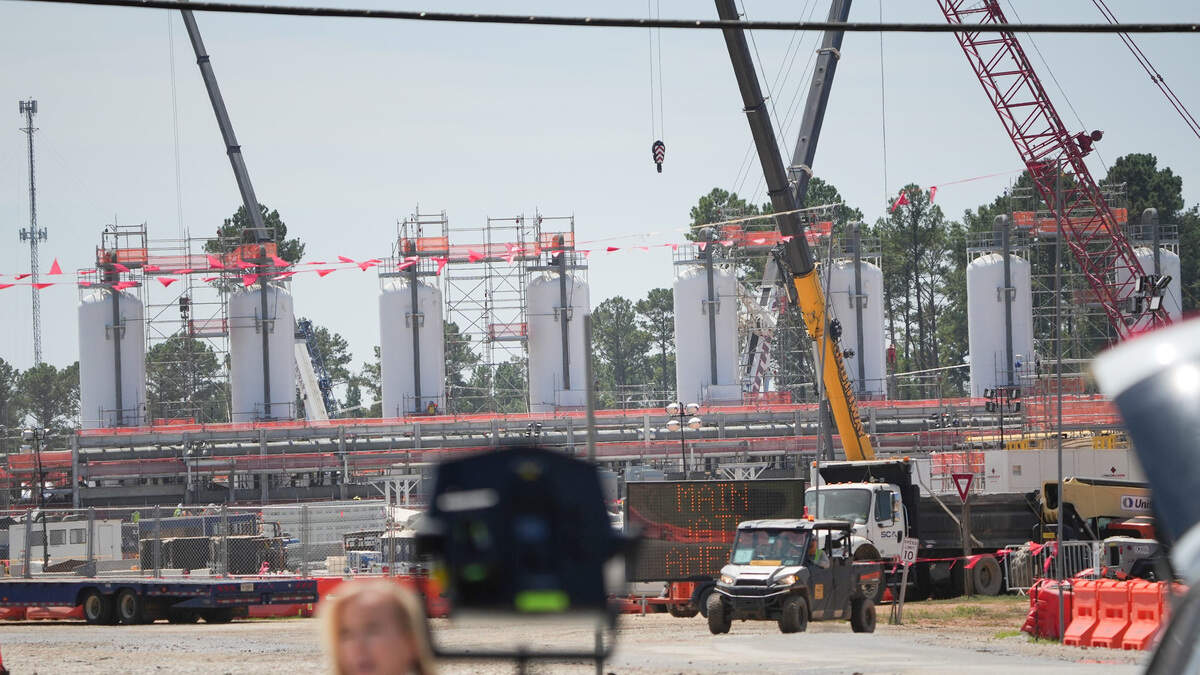
South Carolina utility regulators won’t review a natural gas plant being built for a data center, a unanimous decision some say could encourage future developers to come to build in the state.
Read more SC PSC power generation stance creates ‘welcome mat’ for data centers, critics warn
The decision could lead to more data center developers coming to South Carolina without enough oversight, said Frank Holleman, a senior attorney with the Southern Environmental Law Center.
“But as a practical matter, it’s putting out a welcome mat in South Carolina for large data centers who want to build power plants, and without any review at the state level of the impact of these plants on neighboring communities, the environment, our energy system.”
The Trump administration, political candidates and some state lawmakers have advocated for data centers to build their own power, rather than rely on public utilities, to avoid costing ratepayers.
Private power sources may create other issues, though, including air pollution, leading to questions over who in the state should oversee its developments. The Public Service Commission is tasked with reviewing new power generation and whether its necessity outweighs potential downsides of the project, like harm to the environment.
But for a Spartanburg data center’s 450 megawatt natural gas plant, built by Valara Holdings, the Public Service Commission decided it did not have a say, since the power would be generated by and for the developer alone.
The $2.8 billion data center development project is being built at 4000 Pine Street. It includes four proposed buildings, a power yard, internal roadways, a site access road, 45 natural gas-fuel generators, 11 natural gas turbines and electrical equipment houses, according to a permit description and applications.
A group of local residents in Spartanburg County and the Southern Alliance for Clean Energy wanted the Public Service Commission to require Valara Holdings to seek and receive permission from the state regulators to continue.
Doing so would inform residents and regulators about the large project and “protect the public, air, and environment of the surrounding communities, Spartanburg County, and South Carolina,” attorneys from the Southern Environmental Law Center wrote in filings.
The PSC unanimously determined it did not need to investigate the natural gas plant because the power would be produced for and by a private company, matching the argument made by Valara’s attorneys. Valara Holdings is a subsidiary of NorthMark, and a spokesperson said in an email the company was pleased the PSC agreed with their position. A final order from the PSC is still pending.
The Office of Regulatory Staff, the state’s utility watchdog, disagreed. The “siting act is not limited solely to public utilities or to entities generating electricity for public use,” the state’s watchdog wrote in a letter to the PSC in July. While determining whether to grant any project a certificate, the Public Service Commission looks at its necessity against potential consequences, like negative impacts to the environment.
“The whole Siting Act, at least the way I view it, is it gives the commission this holistic view of what’s the impact on the state,” said Office of Regulatory Staff deputy director Ben Mustian during a hearing last month.
The Public Service Commission also decided only the Office of Regulatory Staff could “compel compliance” of the state’s siting law by hauling a private company to state court. That means environmental or citizen groups alone could not ask the PSC to rule on data center development, according to the PSC’s passed motion.
A spokesperson for ORS said the office would review the legality of future projects on a “case-by-case basis.”
“Once the Commission issues its formal order in this matter, ORS will review the decision and its potential impact on future generation projects,” ORS spokesperson Hank Page wrote in an email. “ORS also would look at those projects on a case-by-case basis to determine whether those projects will be constructed in compliance with the law, and whether to bring any enforcement actions likely would be dependent upon the specific facts associated with each individual project.”
Read more Buster Murdaugh’s libel lawsuit against media companies can go forward, judge rules
State law requires the PSC to grant a “certificate of environmental compatibility and public convenience and necessity” to a “major utility facility,” or electric generation plants 75 megawatts or greater. But the PSC determined their authority did not extend to Valara, a private company.
Holleman said because the natural gas plants can have an impact on the environment and surrounding communities, a statewide entity should determine where the infrastructure is sited. Holleman represented the Spartanburg residents.
“That’s why it’s called a siting act,” Holleman said. “And [it’s] not just left to the desires of an equity firm from New York or somebody from Chicago or Europe or Asia or wherever who decides they want to buy property and put a facility, a data center, and a big power plant somewhere.”
But in an editorial published by the Post and Courier, state Rep. Brandon Newton, R-Lancaster, a House Republican leader, argued the siting law was not intended for private businesses generating power for themselves. Newton did not respond to a call requesting more information about his position.
The Valara Holdings data center, and the Public Service Commission’s decision over whether to scrutinize the project, garnered significant public interest and concern. 46 individuals or couples, all unaffiliated with an organization and many with a Spartanburg address, filed letters of protest on the petition’s docket. During a meeting on the issue, Commissioner Justin Williams said the last time so many people were present in the Columbia hearing room was “the merger and abandonment hearing for Dominion Energy and SCE&G back in 2018.”
The public outcry isn’t unique to Spartanburg County. Residents and local governments across South Carolina and the country have pushed back against rapid data center development, often citing concerns that the infrastructure needed to power AI and other digital services could use too much water, raise power bills or lead to noise pollution in rural communities.
This week, President Donald Trump criticized communities protesting data center development, saying “you will only have yourselves to blame” if the U.S. “kills the Golden Goose.”
“The only reason that communities throughout the U.S.A. should not want Data Centers is if they want to end up being backwards and poor,” Trump wrote on TruthSocial. “If they want to be successful and rich, with far lower taxes and jobs all over the place, let Data Reign.”
Other Valara data center permits
The Spartanburg data center and its natural gas generation has applied for other permits, including two environmental and development, which also offer chances for public participation.
Valara has applied for synthetic minor air construction permits with the Department of Environmental Services, one of which has been approved, and land development permits with Spartanburg County. It’s expected to ask for another air quality permit once construction is completed, according to a draft application.
The generators and turbines will emit pollutants, including particulate matter, carbon monoxide and nitrogen oxide, according to a state Department of Environmental Services fact sheet.
Valara also asked for two minor permits for their project rather than a major development permit, which opponents of the project say helps the data center evade public participation. The land development permits are the subject of a pending lawsuit brought by the same group of Spartanburg County residents.
South Carolina lacks any statewide standards for data centers. Lawmakers put up several bills placing guardrails on data centers, but they did not gain traction this year. A one-year water reporting requirement for data centers passed in the state’s budget.
Read more Major road closures announced ahead of funeral for fallen CPD officer