 By admin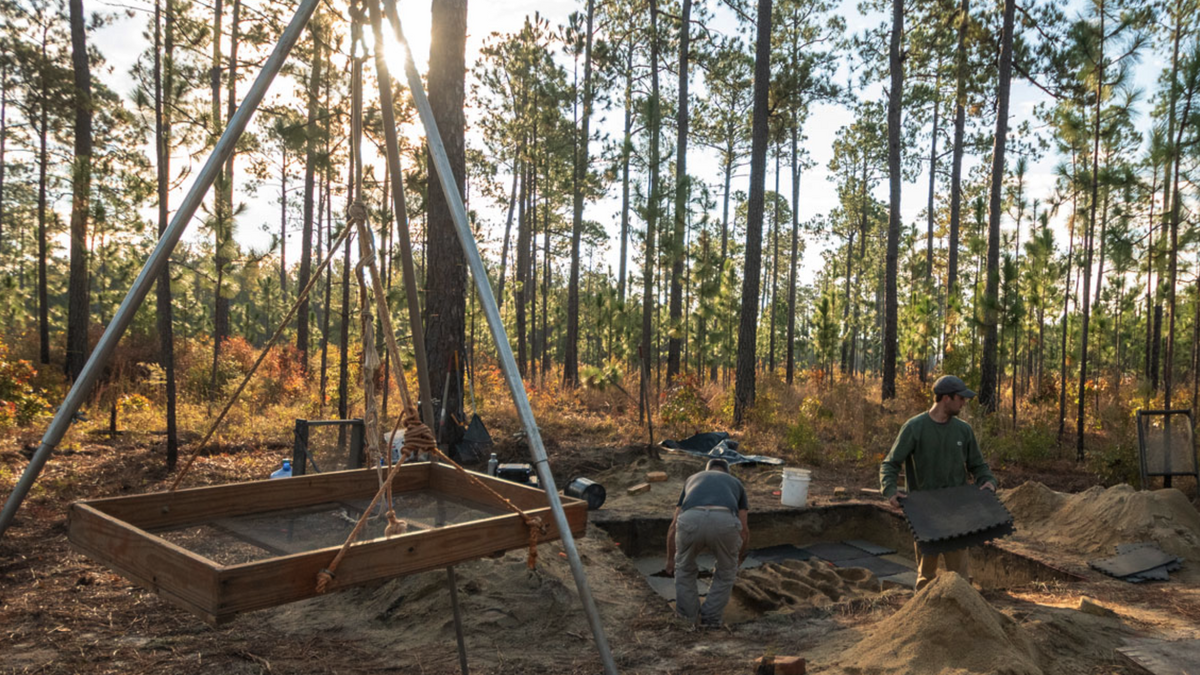
Thirteen of America’s first ever veterans lie beneath a towering pine forest that was once the site of one of the Revolutionary War’s bloodiest battles, names lost to history — until now.
Read more USC’s proposed civil rights center has a powerful location — here’s why it matters
The world now knows one of those John Does is actually a John Pumphrey, a 14-year-old private killed in the Battle of Camden who was identified Tuesday by a team that included University of South Carolina researchers.
“It doesn’t get done very often,” Steven Smith, lead USC archaeologist on the project, said. “It’s cutting-edge science, and it’s kind of an honor to be able to be part of it.”
Pumphrey, felled by musket fire and originally buried in a hasty, shallow grave, was identified after nearly 250 years through genetic analysis of a skull fragment by FHD Forensics, an international genealogical investigation firm.
They were finally able to make a DNA match to more than 20,000 modern relatives, mainly by contacting families to share their family trees and other records to confirm Pumphrey’s lineage.
Nancy White, a 71-year-old Maryland resident and one among the thousands of relatives, told Utah Public Radio that the news was “absolutely a miraculous discovery” for her family.
After the identification, Smith and the team are piecing together a fuller picture of what happened at the Battle of Camden, drawing new conclusions from years of work, including the mapping of lead shot found across the battleground.
The young teen was a member of the 7th Maryland Regiment and 1st Maryland Brigade of the Continental Army, who had to stand nearly alone against a heartier and more experienced British army after the North Carolina and Virginia militias fled.
Read more Severe Storms Are About to Hit America’s Highways: Here’s What Drivers Need to Know
Pumphrey would likely have been buried very close to where he died, giving historians a better idea of how far the Marylanders advanced at Camden before retreating.
“That’s just one little piece of information that you gather,” Smith said. “You add it all up to all the other things we find, and that tells the story of the battle.”
The 1780 Battle of Camden was one of the patriot army’s most costly defeats — what Smith calls a “major disaster” — with more than 1,300 casualties estimated on the colonists’ side according to the American Battlefield Trust. It was a crushing setback to the colonists’ campaign to retake South Carolina.
Pumphrey, alongside a dozen brothers-in-arms and one British soldier, were reburied with full military honors in a historic cemetery near the battleground in 2023.
Smith and his colleagues were originally led to possible remains by relic collectors, and eventually discovered bones that were exposed, visible just beside tree roots. The team kept the location of the remains quiet until they were carefully excavated and reburied, said Smith, who was concerned that too many visitors could disturb the site, as well as the soldier’s peace.
He hopes the team will identify the remaining soldiers lost at Camden, shedding a little more light on America’s birth and South Carolina’s place in it.
“We did everything we could to honor them and to treat them with respect, and we’re glad they’re reburied,” Smith said. “The goal would be to identify all the Continental soldiers that are now buried in Camden.”
Read more China industrial profits stay resilient as economy leans on factories, exports