 By admin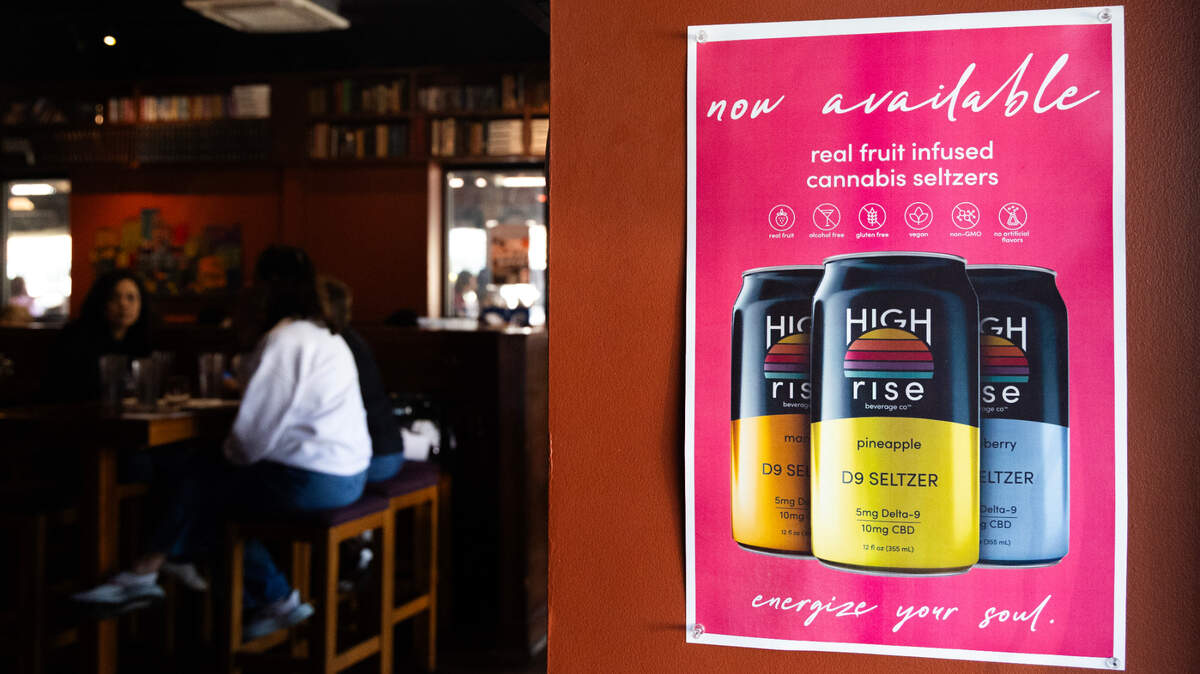
When someone drinks a THC-infused seltzer that gives them a buzz, South Carolina lawmakers want them to stay off the road.
Read more Stocks perk up and oil cools as US and Iran halt hostilities
But how many dangerous drivers under the influence of legal hemp-derived edibles, or illegal marijuana, on South Carolina roads is unknown and difficult to track. Some argue 40% of serious DUIs involve a THC-impaired driver. In 2025, only a miniscule fraction of drivers involved in collisions in South Carolina were drug tested, and about 20% tested positive for marijuana, according to state Department of Public Safety data.
Cracking down on stoned drivers through THC limits and more blood tests was important for some lawmakers as they hashed out the details of two bills this year. One would strengthen the state’s DUI laws while the other would regulate edibles and drinks with THC, the high-inducing compound found in marijuana.
Both may be dead for the year after the House voted down a THC proposal and the Senate did not allow the DUI bill to advance Thursday.
“There are lots of people who are getting hurt and killed because of THC-impaired drivers,” state Sen. Shane Massey, R-Edgefield, said earlier this month.
THC is the intoxicating compound in hemp and marijuana. While using marijuana is illegal in all cases in South Carolina, hemp-derived THC consumables are allowed, for now. Under the federal definition, hemp plants have very low levels of THC, but producers of the high-inducing edibles extract larger quantities to give users a buzz.
Cannabis, the name of the plant that includes both hemp and marijuana, can impair drivers’ differently than alcohol and reduce their ability to properly stay in lanes, perceive their speed or manage distractions, said Tim Brown, a research scientist at the Driving Safety Research Institute at the University of Iowa.
How many high drivers are on South Carolina’s roads is unclear, though proponents of upping blood draw requirements and implementing limits frequently said 40% of serious intoxicated driving incidents tested positive for THC in debates.
But only about 0.07% of drivers involved in a traffic collision last year tested positive for marijuana, according to South Carolina Department of Public Safety data. Only 0.4% of involved drivers were given a drug test last year, and more than 200 of the 1,135 tests administered are still pending or came up with unusable results, wrote Emily Thomas, director of statistical services and strategic planning at the South Carolina Department of Public Safety, in an email.
Of the 0.4% of drivers involved in a collision tested with usable results, about 20% came back positive for marijuana, Thomas wrote. With very few drivers actually being drug tested, it’s likely there are more cannabis impaired people on the roads.
The 40% statistic cited by lawmakers may be referring to two different data points, both of which don’t fully capture the scope of high driving in South Carolina. One is a study conducted in over a six-year period in Ohio on fatal car wrecks, and another is DUI test data collected by SLED in 2025 and the beginning of 2026.
The 40% has been used to justify proposed regulations on hemp and THC limits in blood to drive.
“We have a terrible problem with DUIs. Even if you just consider the alcohol part, it’s a bad problem in South Carolina,” Massey told reporters earlier this month. “But when you hear the numbers from law enforcement about 40% of felony DUIs being THC-related, that’s an even more alarming concern, and it’s even more of a reason for us to insist on taking blood in those situations.”
Massey said earlier this month SLED gave him the 40% statistic, which he believed encompassed South Carolina drivers. State Sen. Michael Johnson, R-York, said he pulled the statistic from his notes from SLED’s testimony. Johnson chaired the panel hearing testimony for the THC regulation.
When asked by The State for statistics dealing with THC-related traffic incidents, a spokesperson for SLED sent a 2025 American College of Surgeons study, which drew data from traffic fatalities in an Ohio county. The study found about 42% of drivers that died in a crash tested positive for THC. SLED Chief Mark Keel referenced the same study during public testimony in November, in front of a committee led by Johnson.
SLED also provided data to lawmakers about DUI-related and traffic fatality toxicology results. In 2025 and through Feb. 10, 11% (189 drivers) of DUI-related drug tests came back positive for cannabis and not alcohol or other drugs. Of the nearly 1,800 drivers tested, 8% tested positive for cannabis and alcohol, and a fifth were positive for cannabis and other drugs, which may also include alcohol.
The tests do not include all drivers involved in DUI cases or collisions.
The toxicology report is performed for regular or felony DUIs after an alcohol analysis is completed, according to the data provided by SLED. If someone crosses a blood-alcohol content threshold and doesn’t have a history of using drugs, a toxicology report is not done. In the time period provided by SLED, nearly 1,800 toxicology reports were completed and about 38% tested for cannabis.
It only includes law enforcement agencies using SLED’s toxicology lab and accounts for drivers that tested with more than either 1 or 5 nanograms of THC per milliliter of two intoxicating compounds found in their blood.
“Most all” traffic cases come through the SLED lab in South Carolina, including the state Highway Patrol, spokesperson Renee Wunderlich wrote in an email. Some of the state’s coroners’ use the SLED lab, but others outsource their toxicology tests, according to Wunderlich and several county coroners interviewed by The State.
It’s difficult to collect data about high drivers, said Brown, the University of Iowa researcher. Law enforcement doesn’t always continue to test for THC after someone is charged with driving under the influence to minimize costs, and drug tests don’t always indicate how impaired someone actually is, he said.
South Carolina law enforcement organizations argue intoxicated drivers are a problem in the state, and THC edibles should be strictly regulated. Keel supports a complete ban, or at least a strict regulation, on all THC products in letters to House lawmakers this winter and Thursday.
Read more Canada backs Greenland mine producing metal crucial to defence industries
Other South Carolina law enforcement organizations also wrote to state House leadership in February about the dangers of high drivers on state roads, particularly without a ban or strict regulation on currently legal THC edibles.
“THC impairs reaction time, coordination and decision-making of a driver,” wrote Sally Foster, executive director of the South Carolina Sheriff’s Association. “Unlike alcohol, there is no simple, reliable roadside test to determine THC impairment. As availability increases, sheriffs anticipate an increase in impaired-driving cases that are more difficult to detect, prosecute and deter, placing deputies and the public at greater risk.”
Plus, with the proliferation of legal intoxicating hemp products, South Carolina should have the tools to prosecute dangerous drivers, said state Sen. Greg Hembree, R-Horry. Hembree is a former solicitor and chaired the DUI bill’s conference committee.
“The use of it has grown, has really grown by leaps and bounds now,” Hembree said. “And less people are drinking alcohol, and they’re substituting THC drinks for that, and they can leave you severely impaired.”
SC lawmakers consider DUI, hemp regulations
South Carolina lawmakers worked on two bills dealing with THC this year: DUI reform and a consumable hemp regulation. The proposed DUI rules expand when and why blood tests can be administered, in part to better capture when someone in the state is driving stoned. A provision also creates a blood-THC content threshold of 5 nanograms per milliliter.
The proposed blood draw requirements will allow the state to better prosecute THC-related DUI cases, Hembree said. A police officer will need to have “reasonable suspicion,” a relatively low threshold, to believe someone is intoxicated on THC. If the suspect consents to a blood test, they could have it drawn at a state-licensed location, which could be in a police station, by a medical professional, under a version of the DUI proposal.
The regulation on intoxicating hemp drinks failed in the House Thursday and is more-than-likely dead for the year. The DUI bill also stalled Thursday, narrowing its chances of becoming law this year.
“THC and DUI, they’ve been linked this year, all year they’ve been linked,” Massey told reporters Thursday. “The debates on those have been intertwined, so they’ll probably rise or fall together. Today, they both fell together.”
Some provisions of the THC regulations were targeted at preventing dangerous drivers. For example, the Senate version would restrict THC drinks from being sold in South Carolina bars and restaurants, in part to prevent patrons from driving home high.
Creating a limit for driving on THC
A stalled version of the DUI legislation would make 5 nanograms of THC per milliliter of blood the legal limit for driving.
People who regularly use THC consumables may meet the proposed thresholds even when they are not impaired, while infrequent consumers may not meet the limit of THC in their blood while still being too high to drive safely, Brown, the University of Iowa researcher, said.
Plus, if someone eats or drinks THC, it may take longer for it to appear in the blood, stay their longer and have a lower peak, Brown said.
“Having an arbitrary threshold, while it sounds nice, can result in treating people who are not impaired as impaired, while also letting people off who are significantly impaired,” Brown said.
Hembree said SLED recommended the 5 nanogram threshold. He also said police officers pull someone over and will conduct a blood test for a reason after observing their behavior.
“It’s like alcohol, there was something that got that officer’s attention,” Hembree said.
Brown said the best tools for testing cannabis impairment are behavior exams, including the drug recognition expert protocols or the Advanced Roadside Impaired Driving Enforcement program, rather than blood tests.
But those tests don’t always give law enforcement a definite answer on how the driver was impaired, Brown said.
“When you focus on just the binary, are they on cannabis, or are they not on cannabis, well, it could be that they’re on alcohol and ADHD medicine, and that’s why they were behaving the way they are,” Brown said. “Or they could be on cannabis and alcohol. They can have a low level of cannabis and low levels of alcohol, and they’re impaired, but neither which are they impaired enough on their own.”
If the DUI bill becomes law, any officer that wants to test will have to be a drug recognition expert three years after implementation, under a working version of the proposal.
“The [DRE] training is available, it’s out there, and it’s being implemented along and along,” Hembree said. “But there’s no, there hadn’t been any real push to do that yet. This will be that push.”
Read more Europe could be a ‘compelling story’ J.P. Morgan says, lifts equity index targets