 By admin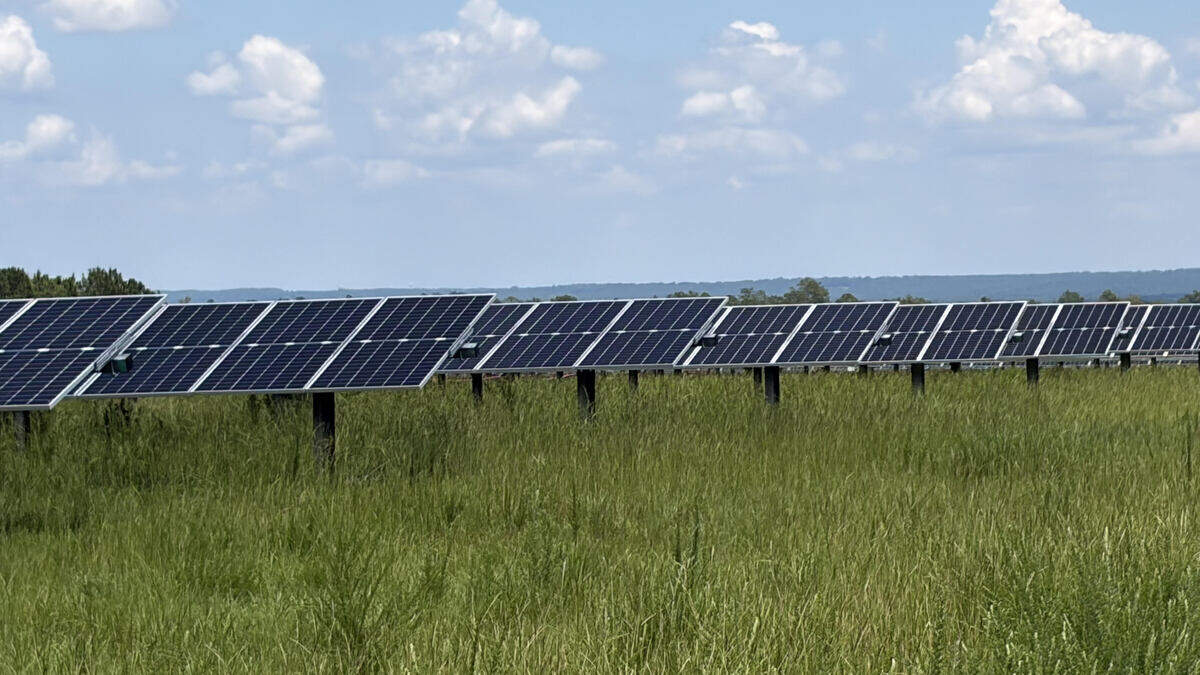
Some Richland County landowners, the mayor of Eastover and a former top county official are upset about the expansion of solar farms in their rural community as developers seek places for the sun-soaking energy projects.
Read more South Carolina man dies after being ejected from car in crash, coroner says
Lower Richland residents pressed the County Council this week to stop solar farms that they said have begun to convert agricultural land into fields of industrial-scale energy projects, a phenomenon some said is ruining vistas in the area.
The concerns are being triggered by the possible location of a massive solar farm several property owners said they’ve become aware of during the past month. A representative of a Texas company has approached some of them about using their land for a sun farm, the council was told.
Among those upset are the owners of Mr. Bunky’s, a well-known general store on U.S. 378. The store has a petition for people concerned about solar farms to sign, said Jill Carter Lewis, who along with her brother runs the general store. The family also hosted a community meeting July 5 at the store after learning that another solar farm is interested in the Eastover area.
“The petition is to stop the addition of any more solar farms in Eastover,’’ Lewis told the County Council during its meeting Tuesday, July 14.
“These solar companies, there is nothing green about them. They are advertising green renewable energy. But to us, there is nothing green about logging, grading, spraying herbicides and then fencing it in … to prevent wildlife in their natural habitat.’’
Solar farms are expected to cover as many as 3,000 acres near Eastover in the coming years if the latest project is built, Lewis said in an interview Wednesday with The State.
One solar farm near the town of Eastover already covers 740 acres and another one proposed nearby will affect 472 acres, she said. The latest project could stretch across 2,000 acres, said Lewis, whose family has researched property records.
Unfortunately, she and others said they need to know more. Neither the county nor the solar company has provided information about the latest proposal, she and others told the County Council.
County Council Chairwoman Jesica Mackey said Richland would get back to those complaining about the proliferation of solar. The State was unable to reach Mackey on Wednesday.
What is known is that, earlier this summer, a company called RWE approached the Carter family about using some of their land for a large sun farm in the Eastover area, the family said. The Carters said no, but they said others in the area are working on deals with the developer.
Jason Carter, the brother of Lewis, said a representative of the solar company RWE stopped by land the family farms several weeks ago to ask about using part of the property to access other land planned for a solar farm. The representative showed him a map of various properties the company was interested in, Carter said.
An official with RWE, based in Texas, said he could not answer questions but would tell the company’s media relations department about The State’s inquiry. The company provided no further comment. The company’s website shows it has more than 100 solar energy projects across the country.
Lewis and Carter were among 10 people who asked the County Council for help during the Tuesday night meeting. The speakers included Eastover Mayor James Faber and former County Council Chairwoman Bernice Scott.
“They’re trying to install some major development of which we have not had the opportunity to review,’’ Faber said. “No one has ever come out at one point to discuss it, and it’s really disgusting if you have a corporation like this coming into the community and not advertising and not allowing us to have input.’’
One solar farm that has already been set up is the 740-acre project outside Eastover. A project adjacent to it was announced last year by the Columbia Area Development Partnership, the county’s lead economic development authority. The partnership’s co-chair is Mackey, the county council chairwoman.
Jeff Ruble, the chief executive at the development partnership, said he was not aware of an effort by the Texas company to locate a solar farm in Richland County. But he said solar projects provide revenue for the county to fund schools and the government at little cost to taxpayers. The farms essentially consist of solar panels sitting in fenced off fields. Such projects help diversify the energy grid, making the grid more reliable, solar boosters say.
He did not have details Wednesday afternoon, but Ruble said one farm in Eastover is expected to have an economic impact of $7.5 million over the next three decades. Ruble said the solar farm pays the county an annual fee.
The existing solar farm near Eastover covers a rolling, open area along VanBoklen Road, and is easily visible through a thin veneer of trees, not far from Dominion Energy’s Wateree coal-fired power plant.
Residents who spoke at the County Council meeting complained that Richland County’s zoning laws aren’t strong enough, in some cases allowing solar projects to be situated without public notice.
Read more 18-year-old charged again after dormitory shooting deaths at SC State
Officials with Richland County’s planning department were not available Wednesday to explain what approvals solar farms need to open up in the county.
The S.C. Department of Environmental Services, depending on the solar farm plan, can require stormwater permits and certification that solar farms won’t pollute nearby creeks or rivers. Some solar farms must also submit plans to restore the sites once the farms close, according to the agency’s website.
The S.C. Public Service Commission also must approve large solar farms, those of 75 megawatts or greater.
A key complaint about solar farms is that they are unsightly, with masses of industrial-looking panels that extend across former forests and farms. So screening requirements that require a buffer of trees around the farms could help mollify some concerns.
But an organization that tracks local solar laws said Richland County does not have a requirement to screen solar farms from roads and other people’s land. The Carolinas Development Assistance and Siting Hub website says Richland County’s zoning law includes limits on height and requirements for fencing.
Complaints like those heard at Tuesday night’s meeting aren’t unique to Richland County. Property owners across the state and the nation are increasingly concerned about solar farms taking up rural farmland.
Some people question whether the farms will cause polluted runoff to leave the property, while destroying the natural landscape. Others say the solar farms are unsightly intrusions on their rural ways of life.
Concerns about the location of solar farms is occurring as South Carolina – and the nation – are increasingly relying on solar power to feed the energy grid. These farms aren’t close to replacing traditional forms of energy, such as nuclear or natural gas, but they do supplement the power supply.
Stacey Washington, the Southern Alliance for Clean Energy’s director of equity and clean energy, said land-use issues about solar farms are popping up across the country, but the big farms are non-polluting and don’t take up much space when compared to residential development.
By 2035, Solar energy generation would use about 1.4 percent of the agricultural land in South Carolina, according to a 2024 report by University of South Carolina research economist Joseph Von Nessen.
“This anticipated expansion of the solar industry does not represent a significant threat to the state’s thriving agricultural sector,’’ his report said.
Solar energy, despite some of the land-use questions, is a good thing as states like South Carolina increasingly look for new sources of energy, boosters say. Solar is a non-polluting way of producing power, unlike coal or natural gas, and it doesn’t need a fuel supply that can cause electricity costs to fluctuate. All a solar farm needs is the sun’s rays, she said.
“It is clean energy,’’ Washington said. “It’s not emitting pollution like coal or natural gas, and it doesn++ have fuel costs.’’
A report by the Carolinas Development Assistance and Siting Hub said environmental threats from solar farms exist but they are relatively low. Solar panels, for instance, are made mainly from glass, polymers, aluminum and copper. Solar energy systems also contain semiconductor materials and some forever chemicals, but the report did not raise substantial concerns about those materials.
“Solar PV systems present limited adverse effects to public health and safety,’’ while helping to reduce the need for fossil fuel plants that release carbon that can contribute to climate change, the report said.
Those attending Tuesday night’s County Council meeting said they’re not opposed to solar, just where the sun farms are situated. Some said the Columbia area has plenty of parking lots and rooftops on which to place solar panels.
Homer Rose said he’s seen first hand how a solar farm can ruin the scenery of a rural community. He lives across from a solar farm that opened near Eastover several years ago.
“It was a beautiful piece of property when I bought it and I bought it for the beautiful vista,’’ Rose said of his land. “It overlooked 500 acres of prime agriculture, a river basin and the Wateree River. Prettiest sunsets you’d ever want to see.’’
But after the solar farm was built, “I watched the displacement of wildlife,’’ Rose said. “I watched the destruction of a beautiful piece of agriculture. I watched the destruction of natural resources that I had been used to.’’
Read more State, U.S. laws clash over special election to replace Lindsey Graham on ballot