 By admin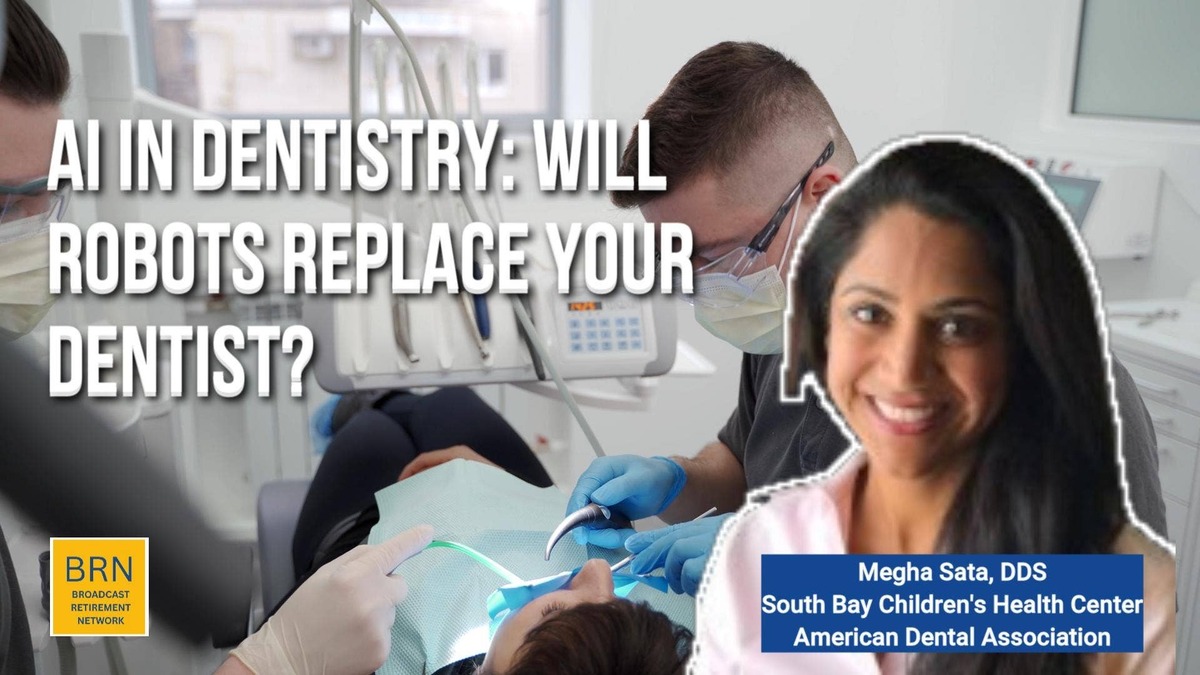
Dr. Megha Sata-registered dentist, American Dental Association council member, and dental educator-returns to the Broadcast Retirement Network to explore how artificial intelligence is transforming dentistry. From AI-powered cavity and bone-loss detection to HIPAA privacy concerns, clinical documentation, and the future of dental education, Dr. Sata offers an evidence-based perspective on balancing cutting-edge technology with the irreplaceable human touch. She also breaks down trending topics like fluoride alternatives, hydroxyapatite toothpastes, the rise of cosmetic dentistry, and practical tips for maintaining your oral health-even without dental insurance.
Read more Bill Ackman buys Netflix stock again, makes bold claim
Jeffrey Snyder, Broadcast Retirement Network
We’re going to welcome back to the program, Dr. Megha Sata. Dr. Sata, it’s great to see you. Thank you for joining us again this morning. Thank you once again for having me.
Megha Sata, DDS, South Bay Children’s Health Center & American Dental Association
I appreciate it.
Jeffrey Snyder, Broadcast Retirement Network
Yep. And I should mention that you are a registered dentist. You’re also a member of the of a council at the American Dental Association, and you practice regular dentistry.
So if people should on the show be familiar with you, but I want to give you that a gracious opening. So thanks again for coming back, coming on. Dr. Sata, I wanted to ask you, you know, artificial intelligence is something that is often talked about as it relates to other industries. I’m particularly interested in how it’s being leveraged in the medical field. How is it being leveraged or what is being talked about in the field of dentistry? Because I could see it has applications there as well.
Megha Sata, DDS, South Bay Children’s Health Center & American Dental Association
Yes, for sure. This is definitely a hot topic in the dental world right now. You know, so the main ways it’s being leveraged are clinically with diagnosing.
Okay. And then administrating the front office and some of the, you know, work around insurance benefits, things like that. And then lastly, it’s also being used to help with things like 3D printing and improve the outcomes as far as, you know, prosthetics, I should say, like crowns, things like that.
So it’s used in all aspects now. Now the topic is really trending because everything’s so new and we’re trying to figure out how to make sure that as AI is used more and more in healthcare, how do we make sure that, you know, we’re taking all the ethical things into consideration, that people are becoming overly dependent on these tools for things like diagnosing and that dentists are retaining their control over, you know, patient care.
Jeffrey Snyder, Broadcast Retirement Network
So are there, I would imagine that there are large language models for every industry, but are there large like a chat GPT or an open or a gentic AI large language model for dentistry where it’s built specifically for your industry, your field and there and different aspects, subclassifications of the fields, orthodontics, oral surgery, et cetera.
Megha Sata, DDS, South Bay Children’s Health Center & American Dental Association
So the largest language model that I know of, and I could be wrong, but in healthcare in general right now, there’s an, there’s one called open evidence. Okay. And I use that.
And so I know that it is a healthcare platform, but there are dental data that they’re taking information from, right. And collecting, and it’s, it’s pretty high quality. Now, all of these things are being developed at a rapid pace.
And, you know, dentistry, like medicine relies a lot on electronic health records. So that’s where some of these bigger companies are trying to embed these language models into their software.
Jeffrey Snyder, Broadcast Retirement Network
And they started her up, but like, they would have to align themselves with HIPAA, right. That’s, that prevents big concern. I think that’s the federal law that prevents the sharing of data that belongs to me versus what belongs to you, right?
Megha Sata, DDS, South Bay Children’s Health Center & American Dental Association
That is correct. So privacy is a big issue, right? Like we want to maintain the patient’s privacy.
And that is where some of the worry about moving forward with AI, you know, they want to make sure that every AI platform that’s out there embeds HIPAA compliance within the platform. So that, that’s one of the things that I know at the American Dental Association, that as AI is growing and they are developing policies and guidelines around it, HIPAA is a big factor.
Jeffrey Snyder, Broadcast Retirement Network
Yeah. I mean, you can’t, privacy is another topic that I don’t think you can turn on the news without hearing about. There are certain cameras that I think people are concerned about.
There’s metaglasses and other things that people are concerned about. So I totally respect that and understand that. And I think it’s hard probably for organizations that are really good at the medical aspect.
They have to get their arm, like American Dental Association, American Medical Association, and even industry trade groups in non-medical fields to get their arms around this, because you’re basically, these things grow at exponential rates. They can perform tests quicker than you or I ever could.
Megha Sata, DDS, South Bay Children’s Health Center & American Dental Association
Yeah. And, you know, there’s certainly a positive to that, right? The quality of care, hopefully, will be improving with this, I call it the second set of eyes.
You know, there’s a lot of AI being used in dentistry that is helping diagnose, for example, when you get x-rays at the dental office, it’s helping diagnose possible cavities, possible bone loss. And I use the word possible because that’s where we need to make sure that our checks and balances are in place. You know, at the end of the day, it all needs to be controlled by the dentist.
And I guess my apprehension with some of it is the over-reliance on it. And also, especially for newer dentists that are using it. You know, but dental schools are also looking at how to use AI in education.
And, you know, so all of these things are being talked about and addressed. It’s interesting. I think that in the hands of the right providers, it’s only going to improve patient outcomes.
Jeffrey Snyder, Broadcast Retirement Network
Yeah, I think what you do is based on, you know, I would come to you because you have a great amount of experience. Not only do you probably have very large amounts of positive reviews on the different medical websites, but you have a lot of experience and expertise. And you have a good demeanor about you in terms of relating to the patient.
I think that can’t easily be replicated by anybody, you know, a system, a robot, etc. You need that part of you. You mentioned dental schools.
I wonder, and you’ve done some teaching in your, you have some teaching in your background as an adjunct. And I’m sure you do a lot of, you know, webinars, etc. with practitioners as well.
I would imagine this is embedded in curricula, not only in the dental schools, but in all medical schools. How do you work alongside AI, but don’t lose your, the human touch that is so important in your field?
Megha Sata, DDS, South Bay Children’s Health Center & American Dental Association
Read more Belgium’s biggest wildfire on record heads towards Germany
So I’ll give you an example from my work with the hygiene program where I teach. You know, we use an electronic health record. And in essence, many of the utilization parameters are AI.
But they don’t allow the students, for example, the clinical notes, there’s AI that will record what you’re saying and translate that into a very usable clinical note. So students are aware, and they may get a few moments to practice with those tools, but they’re not allowed to use them. So they have to learn how to, you know, write very high quality notes themselves.
So it’s hard. I think education in general right now is trying to figure this one out. You know, you’ve heard stories about the cheating that happens and all of that.
So it’s all changing so rapidly in every field that I think we’re all just trying to figure this out.
Jeffrey Snyder, Broadcast Retirement Network
Yeah, well, I think you have your work cut out for you only because it’s changing at such an exponential rate. But, you know, I think the medical, you know, American Dental, American Medical Association and others ultimately landed the right spot. If you might permit me, doctor, I wanted to maybe close out by talking about oral health.
I can’t let you go without actually talking about dentistry and the importance of oral health. Any trends that you’re seeing among your patients that maybe tick off some things that we should be doing to improve our brushing, our flossing? Are people still brushing and flossing?
I’m assuming they are.
Megha Sata, DDS, South Bay Children’s Health Center & American Dental Association
Yeah, no, I think, you know, dentistry is very basic in the sense that brush two times a day at least and floss once a day and go to the dentist every six months. It’s prevention, watch what you’re eating, watch your drinks, right? Like make sure you’re not drinking sugary drinks and acidic things all the time.
So it’s basic. The things that are trending, I think, right now with all of the information on fluoride and some of the mistrust that is not evidence based, but some of it is concerning for patients. So I think what I see trending is trying out new toothpastes that have something called hydroxyapatite in them and maybe trying different different alternatives to fluoride.
Certainly they’re not all bad, but, you know, as a practitioner, I like evidence-based dentistry, so I’m a big proponent. But I think that’s trending. I think the idea of oral health as part of your overall health is really catching on finally and the idea that decreasing that bad bacteria in your mouth will overall help your health.
So I think that is, you know, what I’m hoping that most people listening to this understand how important it is to take care of their mouth.
Jeffrey Snyder, Broadcast Retirement Network
Well, like you as a patient, I’m very much into evidence-based dentistry and medical information as well. So I think we’re aligned there. In terms of, you know, I always see commercials for people wanting veneers, people wanting to improve their smile, whiten their smile.
I guess aesthetic dentistry has really come a long way and people are focused. I understand why. I mean, you know, I want to have white teeth.
I want to have good looking teeth. Are you seeing more and more part of your practice involving the cosmetic or the aesthetic aspects of the teeth rather, and not just the, hey, can I chew? And can I, do I have a lisp, et cetera?
Megha Sata, DDS, South Bay Children’s Health Center & American Dental Association
A hundred percent. I mean, before it was a luxury, right? To think about even something like braces.
And now people feel like it’s a necessity. So I get kids in the office who are like 12 and they’re like, my teeth are yellow. I want to whiten them.
And I’m like, no. On one hand, we have the tools, right? And we want to offer them and we want to make sure people are happy with their smiles.
But what I always tell my patients is your smile doesn’t always have to do with your teeth, right? Like I’ve seen older people without teeth who have beautiful smiles. So it is kind of the balance of making people happy and confident versus, you know, sort of this cultural move to have the perfect smile, you know?
Jeffrey Snyder, Broadcast Retirement Network
Yeah, I think you do that. And you kind of take away the human individual element. That’s just my perspective.
Let me close out. You mentioned going to get your teeth looked at maybe every six months. Based on, you know, I know maybe some people don’t have insurance, dental insurance, but for the most part, if you want to get a visit a hygienist or you want to get a cleaning or get looked at by the dentist, are there ways to do so even if you don’t have insurance?
Megha Sata, DDS, South Bay Children’s Health Center & American Dental Association
100%. More and more dentists are offering their own plans, so to speak. So, you know, working with insurance is a bear and it adds a lot of stress and cost to practice, to running a practice, right?
And so more and more dentists are offering their own plans. And my suggestion would be for anybody watching this, if you are a person that has some kind of like periodontal disease or you tend to get more buildup or want a cleaning every three months, that’s great. I would just talk to your dentist and see if you can negotiate.
You know, dentists want to encourage prevention and they would rather have you come in every three months to make sure that, you know, you actually save some time sometimes, right? Than waiting six months to a year. So I would just encourage you to have that talk with your hygienist or dentist and see if they’ll work with you.
Jeffrey Snyder, Broadcast Retirement Network
Yeah. Well, I can tell you as someone who visits a dentist at least twice a year, I love that scaling and that clean feeling when I’m done. So, you know, if I could do it more than two or three times a year, I would.
Dr. Sattar, we’re going to have to leave it there. Thank you so much for joining us and we look forward to having you back on the program again very soon, doctor.
Megha Sata, DDS, South Bay Children’s Health Center & American Dental Association
Thank you. I appreciate it.
The Arena Media Brands, LLC THESTREET is a registered trademark of TheStreet, Inc.
Read more Is your 1982 penny worth $20,000? Probably not, here’s why