 By admin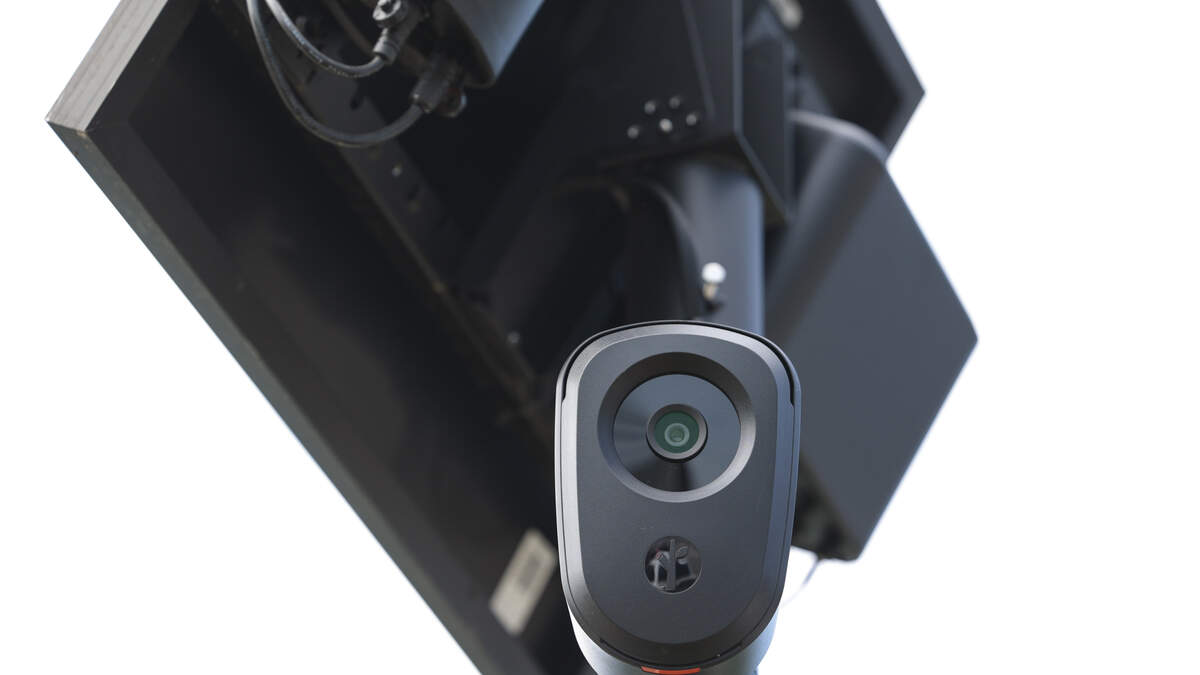
The spread of automated license-plate reading cameras across the country has raised concerns about privacy and an obvious question — how can I tell if my car has been searched?
Read more Fake signatures found on forms to keep inmates in jail for ICE, NC sheriff says
The cameras, used by law enforcement agencies by several vendors but most famously by Atlanta-based Flock Safety, have become a common tool used by police. The cameras scan the license plates of passing cars, allowing officers to search for a specific vehicle, whether it’s to establish a suspect’s location or track a wanted vehicle in real time.
In the Columbia area, several agencies contract with Flock or other camera readers to place cameras at key intersections. In a short period of time, the technology has grown across the region, with some localities planning to expand their use of license-plate readers.
While every car driving past such a camera will be recorded, a law enforcement officer with access to the system would have to enter a search for a specific plate for it to register in Flock’s system. Images captured by the cameras are typically stored for 30 days after the fact.
The website HaveIBeenFlocked.com allows users to run their own license plate though its database, but that will only show data pulled from freedom of information requests to specific agencies and isn’t comprehensive.
Anti-surveillance activists in the Upstate have requested information on searches local law enforcement agencies have performed, with mixed results.
“Only one (agency) has completed that request,” said Mary Dowd with Eyes Off GSP, a group that monitors camera use in the Greenville-Spartanburg area. “The rest were denied for various reasons, and ultimately my takeaway is they have failed to have transparency.”
Some agencies Eyes Off requests records from said they had no such records, since any search would have been logged in Flock’s own system. But Dowd is skeptical of that explanation, since it would mean local agencies aren’t tracking their own use of the technology.
“If the agency is doing an internal audit, and a supervisor downloads the data, that should exist on their computer,” she said.
The one agency that did produce a log of its searches was the Simpsonville Police Department, and Eyes Off GSP provides examples of its search records online. While the local agency conducted almost 500 searches for license plates in the one-month period shown, neighboring agencies requested thousands of searches over the same period using images from Simpsonville’s cameras. One of the selling points of Flock’s system is that it allows law enforcement to share data widely from any agency that uses its system.
“In a 28-day period, over 1 million searches were performed on the Simpsonville PD cameras by 3,430 agencies across 46 states whom Simpsonville PD has shared access with,” Eyes Off notes.
The data gives some indication of what kinds of crimes the Flock system is being used to investigate, although some information like the officer’s name or a case number have been redacted. For some reason, Dowd said, records of Simpsonville’s internal searches do include individual license plates, but that information is removed from external searches of Simpsonville’s cameras.
“Generally speaking, there’s not a lot of concrete conclusions we can come to from this data,” Dowd said. “It’s more like you can infer things from the data, or it’s a place to ask questions.”
Read more Moms for Liberty influence grew after COVID. Why have so many SC chapters closed?
Proponents of the use of the cameras have said Flock and its competitors are a key crime-fighting tool that has helped solve everything from car thefts to kidnappings. But critics say the system puts every passing motorist under surveillance and the technology is ripe for misuse.
In South Carolina, Oconee County recently passed a ban on the use of license-plate readers, and the city of Greer opted to pause its use of Flock cameras after two police officers were accused of misusing them. Instead, the city placed plastic bags over the cameras around town for 90 days.
The website DeFlock, which tracks the installation of license-plate readers across the country using a crowdsourced map, has a toolkit on its site to guide users through filing a freedom of information request with their local agencies.
But finding information about the use in your own community could be more informal.
“My advice to anyone is use FOIA as a last resort,” Paul Bowers, communications director for the ACLU of South Carolina, said of filing a request under the Freedom of Information Act. “If I’m trying to find out what my local police are doing, and what contracts they have with mass surveillance companies, the thing is to find out who the decision maker is in that scenario and asking them. Call your county council person or your town council person.”
He points out that other transparency outlets have compiled data on how often license-plate readers are used from other law enforcement agencies around the country, including agencies in South Carolina.
“Local law enforcement can stipulate some kind of transparency portal, but if local decision-makers decide then they do,” Bowers said. “It’s a step in the right direction.”
But even with more openness from agencies in how the cameras are being used, activists still feel the technology is dangerous in and of itself.
“Really what it comes down to for us is that we believe the government has no business assembling this information on people who are accused of nothing, that this technology is unconstitutional and we want it gone,” Dowd said.
Bowers said he believes the opposition to the technology is something that crosses traditional political boundaries, uniting conservatives and liberals who feel uneasy about mass surveillance.
“An attempt during the Obama administration to use a version of this technology to track people who attended gun shows,” he said. “The ATF wrote up a plan to use license-plate readers for that. People will have a more negative reaction when the political party they oppose is in power, but we have to think more long term than that. Bear in mind that your political opponents could have access to this next.”
Read more Busy West Columbia road will close lane as part of improvement project