 By admin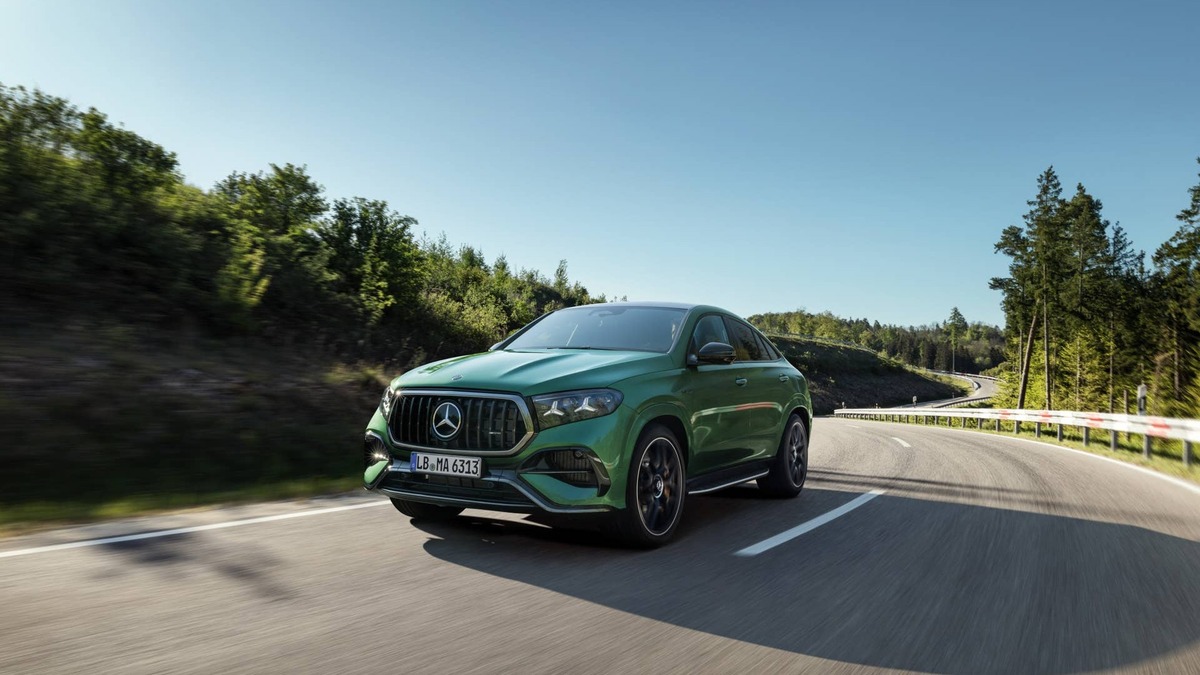
Mercedes holds the higher award and Volvo holds it as standard, which is the whole comparison in one sentence. The GLE earns a 2026 Top Safety Pick+ and the XC90 a Top Safety Pick, a tier apart on paper. Read the fine print and the GLE’s Plus applies only when optional pedestrian front crash prevention is fitted. Order one without that box ticked and both vehicles hold the same award. What separates them after that is what each fits as standard, and Volvo’s list is the longer one.
Read more Tax and fee hikes on the table next year, Maryland lawmakers say
What’s New for 2026
Volvo’s XC90 holds a 2026 IIHS Top Safety Pick across both the gasoline and plug-in hybrid versions, alongside a five-star overall rating from NHTSA. That represents a step down from 2025, when XC90s built before December 2024 and the plug-in hybrid both earned Top Safety Pick+. The vehicle has not changed structurally, and the criteria have.
Mercedes-Benz lists the GLE-Class as a Top Safety Pick+ for 2025 and 2026 when equipped with optional pedestrian front crash prevention, and as a Top Safety Pick without it. That conditional structure is unusual and it is the single most important detail in this comparison for anyone configuring a car.
Specs and Pricing
Volvo XC90
- 2026 IIHS award: Top Safety Pick, on both gasoline and plug-in hybrid versions
- 2025 IIHS award: Top Safety Pick+ on cars built before December 2024 and on the plug-in hybrid
- NHTSA overall rating: 5 stars
- Small overlap front: Good
- Moderate overlap front, original test: Good
- Moderate overlap front, updated test: Acceptable
- Side, updated test: Good
- Headlights: Acceptable
- Seat belt reminders: Good
- LATCH ease of use: Acceptable
- Standard equipment: Blind spot detection, lane departure warning and prevention, rear automatic braking
Mercedes-Benz GLE
- 2026 IIHS award: Top Safety Pick+ with optional pedestrian front crash prevention, Top Safety Pick without
- Small overlap front: Good
- Moderate overlap front, updated test: Good
- Side, updated test: Good
- Headlights: Acceptable or Good, standard
- Pedestrian front crash prevention: Acceptable or Good, with the optional system
- Award condition: The Plus designation requires the optional system to be fitted
Both are midsize luxury three-row SUVs and both fit comprehensive driver-assistance content, so the differences below concern where each brand draws the line between standard and optional. The XC90 range includes a plug-in hybrid carrying the same award, and the GLE lineup spans several powertrains.
Volvo’s award position is worth understanding across its range, where the XC60 misses the 2026 Top Safety Pick list entirely.
The Award Gap and the Option That Creates It
On the published list the GLE sits a tier above the XC90, and the reason is narrower than it looks. The Institute lists the 2025-26 Mercedes-Benz GLE-Class as a Top Safety Pick+ specifically with optional pedestrian front crash prevention. The same vehicle without that system earns Top Safety Pick, which is exactly what the XC90 holds.
That distinction matters because awards are usually read as describing a vehicle rather than a configuration. A GLE ordered without the option is not a Top Safety Pick+ vehicle, and a buyer comparing badges without reading the condition would never know.
Volvo’s award carries no such condition. The XC90 earns Top Safety Pick on the standard car, and the plug-in hybrid carries the same designation.
So the honest framing is that Mercedes offers a higher ceiling and Volvo offers a higher floor. A fully optioned GLE outranks the XC90 and a base GLE matches it. For a buyer who ticks every box, Mercedes wins this section. For a buyer who orders the standard car, it is a draw.
Where the Crash-Test Data Comes From
Both vehicles carry ratings derived from earlier test vehicles, which is standard practice when a structure has not changed and which buyers should still understand. The XC90’s small overlap front rating traces to a 2016 Volvo XC90 T6 test vehicle, with the Institute applying those results across subsequent model years. Volvo redesigned the XC90 for 2016 and has not altered the structure since, so the carry-over is legitimate and the data is nearly a decade old.
That vehicle’s crash performance was strong. Structure and safety cage rated Good, and driver injury measures rated Good across head and neck, chest, hip and thigh, and lower leg and foot, with occupant compartment intrusion measured in single centimeters.
NHTSA has rated the XC90 five stars overall, which is the federal credential and which the GLE’s listing does not include in the sources available. The practical point is that neither vehicle’s award reflects a 2026 test of a 2026 car, which is normal across the industry and worth knowing before treating a badge as current evidence.
Crashworthiness, Test by Test
The two match in three categories and separate in one. Both rate Good in the small overlap front test, which evaluates the hardest frontal impact the Institute conducts. Additionally, both rate Good in the updated side test, which uses a heavier barrier travelling faster than the original protocol to simulate a modern SUV striking the side of a vehicle. The XC90 rates Good in the original moderate overlap front test.
The separation is in the updated moderate overlap front test, where Mercedes rates Good and Volvo rates Acceptable. That evaluation adds a rear-seat dummy to assess how well a vehicle protects passengers behind the driver, and it has caught out a great many vehicles since its introduction. That single result is the most likely reason the XC90 dropped from Top Safety Pick+ in 2025 to Top Safety Pick in 2026 as the criteria tightened.
The Moderate Overlap Test Is Where Volvo Slipped
The updated moderate overlap evaluation is the newest and most demanding of the frontal tests, and it measures something the original did not. By adding a dummy in the second row, it assesses rear-seat occupant protection rather than only driver protection. That matters because rear-seat safety has lagged front-seat safety as front airbags and belt technology improved, and the Institute introduced the test specifically to close that gap.
The XC90’s Acceptable rating places it in the second of four grades, above Marginal and Poor and below Good. It is not a poor result.
What changed is the threshold. The 2026 criteria require Good in the updated moderate overlap front test for a Top Safety Pick, and the XC90 earns the award through the combination of its other results. It earned Top Safety Pick+ in 2025 with the same Acceptable rating, and the higher award now demands more.
Front Crash Prevention and the Pedestrian Option
This is where the GLE’s Plus designation is won and where a buyer has to make a decision at the order sheet. Mercedes offers pedestrian front crash prevention as an option, and fitting it lifts the GLE from Top Safety Pick to Top Safety Pick+. The system rates Acceptable or Good in the Institute’s evaluation.
Volvo’s XC90 carries front crash prevention as standard equipment. The vehicle-to-vehicle and pedestrian systems both rate Acceptable in the available data, which is the second of the Institute’s grades.
Pedestrian detection deserves weight in any modern safety comparison. Pedestrian fatalities have risen as a share of road deaths, the majority occur at night, and a camera-based system has far less to work with after dark.
The structural difference is availability rather than capability. A GLE buyer who does not tick the box has no pedestrian front crash prevention in the configuration the award describes, and every XC90 has a standard system regardless of trim.
Headlights clear the threshold on both, with the XC90 rated Acceptable and the GLE rated Acceptable or Good as standard. Headlight performance disqualifies more vehicles from award lists than any crashworthiness result, so clearing it matters. Volvo applies the same standard-equipment approach in its three-row electric SUV, which holds the higher award outright.
What Arrives Standard and What You Pay For
Volvo wins this section and it is the XC90’s strongest argument. Every XC90 includes standard blind spot detection, standard lane departure warning and prevention, and standard rear automatic braking. That third item is the one worth dwelling on, since it intervenes when a vehicle reverses toward an obstacle or a person and it is not universal at this price.
Mercedes distributes more of its equivalent content through option packages, which is consistent with the brand’s approach across its range and which is the reason its Plus award carries a condition. The practical effect is that a base XC90 and a base GLE are closer than the award tiers suggest, and a fully optioned GLE pulls ahead.
For a buyer who orders sparingly, Volvo delivers more protection without an options sheet. For a buyer who orders comprehensively, Mercedes reaches higher. That trade is genuine and it is the sort of thing a badge comparison misses entirely.
Read more The Safest Car Brands in 2026 Have a Clear Winner
Seat Belts, Child Restraints and the Details Nobody Compares
Two measured categories sit outside the crash tests and both favor Volvo. The XC90 rates Good on seat belt reminders, which is the top grade. Belt use is the single largest determinant of survival in a serious crash, and a reminder system that effectively prompts occupants does more for real-world outcomes than most structural refinements.
That is also a notable improvement over the smaller XC60, which rates Marginal in the same category, so this is not a brand-wide result but a specific XC90 strength. LATCH ease of use rates Acceptable on the XC90, which is the second grade and reflects how straightforward child seat anchors are to locate and use rather than how well they perform in a crash.
Neither figure appears in the award criteria, which means a vehicle can hold Top Safety Pick+ with weak results here and a buyer comparing badges would never see it. For households with children, the seat belt reminder rating and the LATCH rating deserve more attention than they typically get.
What the Ratings Do Not Measure
A Top Safety Pick describes performance in a defined set of laboratory evaluations, and the limits are worth stating. Award tiers change year to year without vehicles changing at all, which is exactly what happened to the XC90 between 2025 and 2026. Reading a drop from Plus to standard as a decline in the vehicle would be wrong.
Conditional awards complicate comparison further. The GLE’s Plus applies to a configuration rather than a model, and no badge on a dealer lot communicates that. Real-world insurance loss data tracks actual injury claims rather than instrumented dummies, and it is a separate body of evidence that does not always follow test results.
Recall records sit outside the ratings entirely, so a buyer should run the specific VIN through the NHTSA database rather than rely on an award. The IIHS evaluations remain the best comparative evidence available here, and they answer a narrower question than the headline asks.
What the Safety Record Actually Shows
Assembled from published IIHS results and standard-equipment lists for both vehicles.
Volvo XC90
- 2026 IIHS award: Top Safety Pick, no options required
- NHTSA overall: 5 stars
- Good crashworthiness ratings: Small overlap front, moderate overlap original, side updated
- Moderate overlap front, updated: Acceptable
- Seat belt reminders: Good
- Standard driver aids: Blind spot detection, lane departure warning and prevention, rear automatic braking
- Award condition: None
Mercedes-Benz GLE
- 2026 IIHS award: Top Safety Pick+ with optional pedestrian front crash prevention
- Award without that option: Top Safety Pick
- Good crashworthiness ratings: Small overlap front, moderate overlap updated, side updated
- Headlights: Acceptable or Good, standard
- Pedestrian front crash prevention: Optional rather than standard
- Award condition: Yes, the Plus requires an option
Mercedes holds the higher ceiling and Volvo holds the higher floor, which is the split in one line. A GLE with the pedestrian system fitted outranks the XC90 on the published list. A GLE without it holds the same award, and the XC90 fits three driver-assistance systems as standard that Mercedes distributes through packages.
Which Version to Buy
On the Mercedes side, the optional pedestrian front crash prevention system is the box that matters. Fitting it lifts the GLE to Top Safety Pick+ and leaving it unticked produces a vehicle holding the same award as the XC90. Any buyer choosing the GLE on safety grounds should confirm that system is on the order before signing, because the badge in the advertising describes the optioned car.
On the Volvo side, every XC90 carries the same award and the same standard driver-assistance content, so the trim decision concerns comfort and equipment rather than protection. The plug-in hybrid holds the identical Top Safety Pick designation, which means choosing electrification costs nothing in safety credentials.
Families carrying passengers in the second row should weigh the updated moderate overlap result specifically, where Mercedes rates Good and Volvo Acceptable, since that test exists to evaluate rear-seat protection.
Scorecard
- IIHS award tier: GLE. Top Safety Pick+ against Top Safety Pick, though the Plus requires an option
- Award without options: Draw. Both hold Top Safety Pick on the standard car
- Frontal crashworthiness: GLE. Good in the updated moderate overlap test against Volvo’s Acceptable
- Side impact protection: Draw. Both rate Good in the updated side test
- Standard driver aids: XC90. Blind spot detection, lane departure prevention and rear automatic braking fitted to every trim
- Seat belts and child restraints: XC90. Good seat belt reminders, the top grade, with Acceptable LATCH
- Federal rating: XC90. A five-star overall NHTSA result
XC90 3, GLE 2, two draws.
So Which One Is Safer?
The GLE, narrowly, and only in the configuration the award describes. The Institute lists it as a Top Safety Pick+ with optional pedestrian front crash prevention, and it rates Good in the updated moderate overlap front test where the XC90 rates Acceptable. That test evaluates rear-seat occupant protection specifically, and for a three-row SUV that is the result that should carry the most weight.
The qualification is substantial and it runs the other way. Without that optional system the GLE holds Top Safety Pick, which is exactly what the XC90 holds, so the tier gap exists only on a configured car. A buyer comparing badges on a dealer lot has no way of knowing which version they are looking at.
Volvo’s case is that its protection arrives without an order sheet. Every XC90 includes blind spot detection, lane departure warning and prevention, and rear automatic braking as standard, and every XC90 holds the same Top Safety Pick award including the plug-in hybrid. It also carries a five-star overall NHTSA rating and a Good seat belt reminder rating, which is the top grade in a category that affects real-world survival more than most structural measures.
The award history deserves stating plainly. The XC90 held Top Safety Pick+ in 2025 and holds Top Safety Pick in 2026 with the same structure and the same Acceptable moderate overlap rating. The vehicle did not get worse. The criteria tightened, which is what the Institute does deliberately and which a buyer should not read as a decline.
Three buyer profiles should take the XC90. Anyone ordering a base or lightly optioned car, since Volvo fits three driver-assistance systems as standard that Mercedes distributes through packages. Anyone who wants a plug-in hybrid, because the electrified XC90 carries the identical award where powertrain choice sometimes costs credentials. And anyone who weighs seat belt reminder performance, where Volvo holds the top grade.
One caution applies to both. Neither award reflects a 2026 test of a 2026 vehicle, since the XC90’s small overlap rating traces to a 2016 test car and carry-over is standard practice across the industry.
Take the Mercedes-Benz GLE for a Top Safety Pick+ and a Good rear-seat protection rating, with the pedestrian system ordered. Take the Volvo XC90 for the same award with nothing optional required, three standard driver aids Mercedes charges for, and a five-star federal rating.
Alternatives to Consider
The Volvo EX90 holds a 2026 Top Safety Pick+ outright, which is the higher award without a configuration condition. The Audi Q7 holds a 2026 Top Safety Pick with quattro standard. The Genesis GV80 earns Top Safety Pick+ alongside a ten-year powertrain warranty. And the Rivian R1S holds Top Safety Pick+ with three rows and genuine off-road capability.
Frequently Asked Questions
Which one is safer?
The GLE, narrowly, holding a 2026 Top Safety Pick+ where the XC90 holds Top Safety Pick. The Plus requires optional pedestrian front crash prevention.
Does the GLE need options to get its award?
Yes. The Top Safety Pick+ applies with optional pedestrian front crash prevention fitted. Without it the GLE holds Top Safety Pick, the same as the XC90.
Why did the XC90 drop from Top Safety Pick+?
The 2026 criteria tightened. Its structure and its Acceptable updated moderate overlap rating are unchanged from 2025, when the same car earned the higher award.
What does the XC90 fit as standard?
Blind spot detection, lane departure warning and prevention, and rear automatic braking on every trim, alongside a five-star overall NHTSA rating.
Read more BRICS nations call for ‘maximum restraint’ in Middle East
Copyright 2026 The Arena Group, Inc. All Rights Reserved