 By admin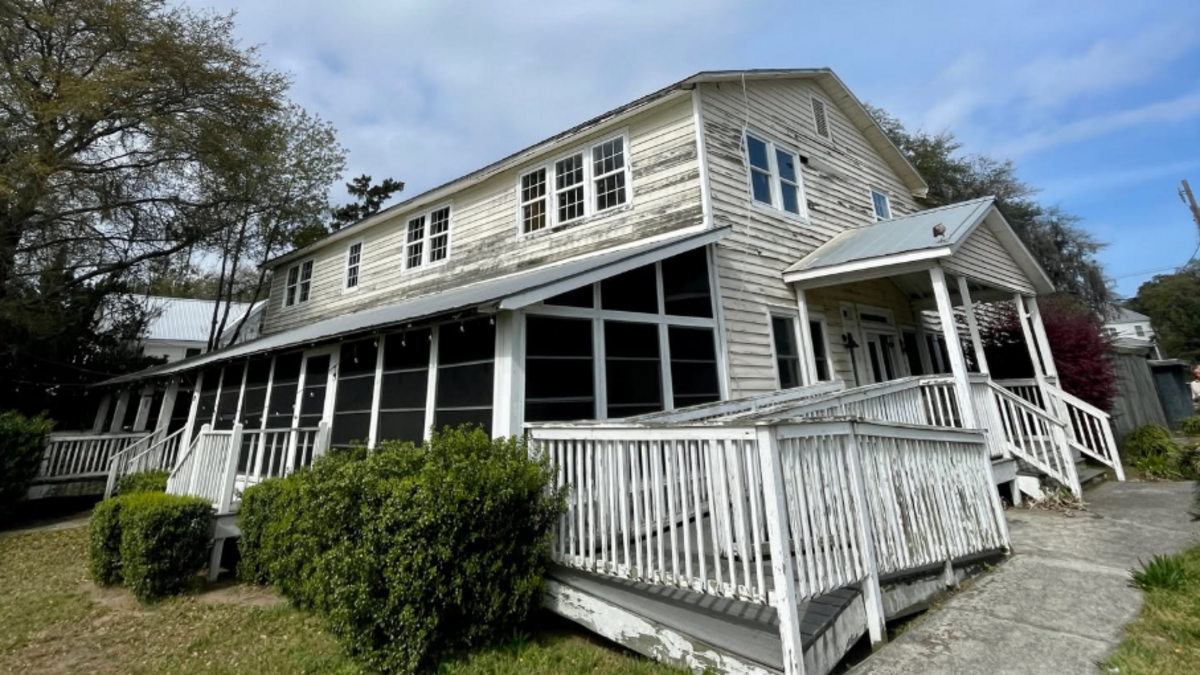
Instead of knocking down the historic, yet dilapidating Oliver’s Lodge near Murrells Inlet’s MarshWalk, Alan Todd pleaded with the owner to deconstruct the materials piece-by-piece.
Read more Republicans jump ship as Trump’s anchor weighs heavy on party
Todd, director of the Conway Architectural Salvage and Heritage Project, has spent the last four years saving materials from historic buildings across South Carolina and giving them a second life. After completing deconstruction of Oliver’s Lodge a few weeks ago, portions of the building’s brick porch supports may relocate to create artificial coral reefs offshore of South Carolina’s coast.
It’s not the first time Todd’s work has been used for artificial reefs. His first project deconstructing a full home in November 2023 repurposed cinder block walls to sink beneath the waves as structures for reefs to prosper.
As a professor at Coastal Carolina University, Todd linked with Paul Gayes, executive director of Coastal’s center for marine and wetland studies, to determine the best use for the material.
“(Gayes) understood, I think immediately, the significance of what we could do,” Todd said.
Reefs off South Carolina’s coast are made of soft corals and sponges, and create essential habitat for many marine species. The brick porch from Oliver’s lodge was deconstructed into smaller pieces, and the idea will be to use them as new solid structures for reefs to form.
Since Todd started his non-profit, his team has saved over 3,000 tons, or upwards of 6 million pounds, of construction material from ending up in a landfill. Roughly 40% of landfill space is taken by construction and demolition waste, and production of building materials comprises 30% to 40% of greenhouse gas emissions globally, Todd said.
“We’re trying to fight against what we call this ‘take-make-waste’ linear economy that is so destructive for our environment, but also, to some extent, our souls,” Todd said. “This kind of blind eye demolition of historic buildings that took years to build by hand… to just have it become normal, just smashing those to smithereens and sending them to the landfill is mind-boggling to me.”
How repurposed material can be used as reefs
South Carolina has over 40 offshore artificial reefs through South Carolina Department of Natural Resources.
Traditional coral reefs aren’t found near the state’s coast, but there are soft corals and sponges that grow on hard structures which provide marine habitat. SCDNR’s reefs are often made from discarded material like cinder block, brick or retired machinery.
Fish are attracted to the reefs for shelter and spawning, and it provides a distinct location for anglers and divers to explore, according to SCDNR.
“These efforts working with Alan Todd, there’s kind of an interesting element to it because it starts adding historical material to (the reefs),” Gayes said.
Read more Single-car crash leaves one dead in Orangeburg County, SC Highway Patrol says
What is the Conway Architectural Salvage and Heritage Project?
Todd, who is a trained archeologist and historian, spent the pandemic renovating his newly purchased home in Conway back to the 1950s, when it was built. In the process, he discovered Re:Purpose Savannah, a Savannah-based non-profit dedicated to salvaging and reusing material from historic buildings, which became the model for Todd’s non-profit.
“(The director) gave me the whole shtick about the utter waste and destruction that is really filling up our landfills, and particularly older structures,” Todd said. “I had already known that Horry County was one of the fastest growing metropolitan areas in the country, and with that comes demolition and destruction.”
On his way back to Conway, he counted about 17 old buildings or demolition sites, and thought of the lumberyard a couple lots down from his home: The McIver-Shaw lumberyard. He approached Edwin McIver, who is the son of the original owner, and pitched the idea of rehabilitating the shop with a focus on repurposing materials, which was warmly accepted.
The non-profit has since deconstructed about 20 projects across the state for reuse, four of them being larger projects like Oliver’s Lodge.
Todd said his team always tries to save a building if it can be managed, but during a late addition of Oliver’s Lodge, foundational supports were taken out and the building’s core began to twist. The owner thought there was no other option than demolition, but Todd noticed the incredible material that he couldn’t bear to see go to waste.
Through deconstruction, Todd found the core of the building was the original frame of the Oliver’s home built during the 1800s, with material perhaps from the Laurel Hill Plantation, he said. After a few years, the family added upper floors and a wraparound restaurant area in the early 1900s.
“What’s so cool is we have the maker’s mark of William L. Oliver on these borders, so we can see the timing of it,” Todd said.
Being able to see the history of the buildings is what makes the projects so unique. The non-profit’s website has written histories of the buildings that have been deconstructed, and the material left-over is sold or donated.
Todd estimated 70% to 75% of the material from Oliver’s Lodge was sold through the process to keep their mission going, and floorboards, structural beams and foundation have already been picked up for furniture building, new flooring installations and the artificial reefs.
The McIver-Shaw lumberyard is now a place to store and sell the reclaimed material, but the former Horry Ice Company building next door will be used to revive the trade crafts, Todd said. Skills like carpentry, masonry and pottery are threatened by mass-production systems, so the renovated icehouse is a place to teach and learn.
“As I started to work on building Conway Salvage, it kind of came clear to me that it’s such a wonderful way to teach people about so many things, and they get to use their hands while they’re doing it,” Todd said.
Read more Trump says he approved fuel economy standards ending Biden EV mandate