 By admin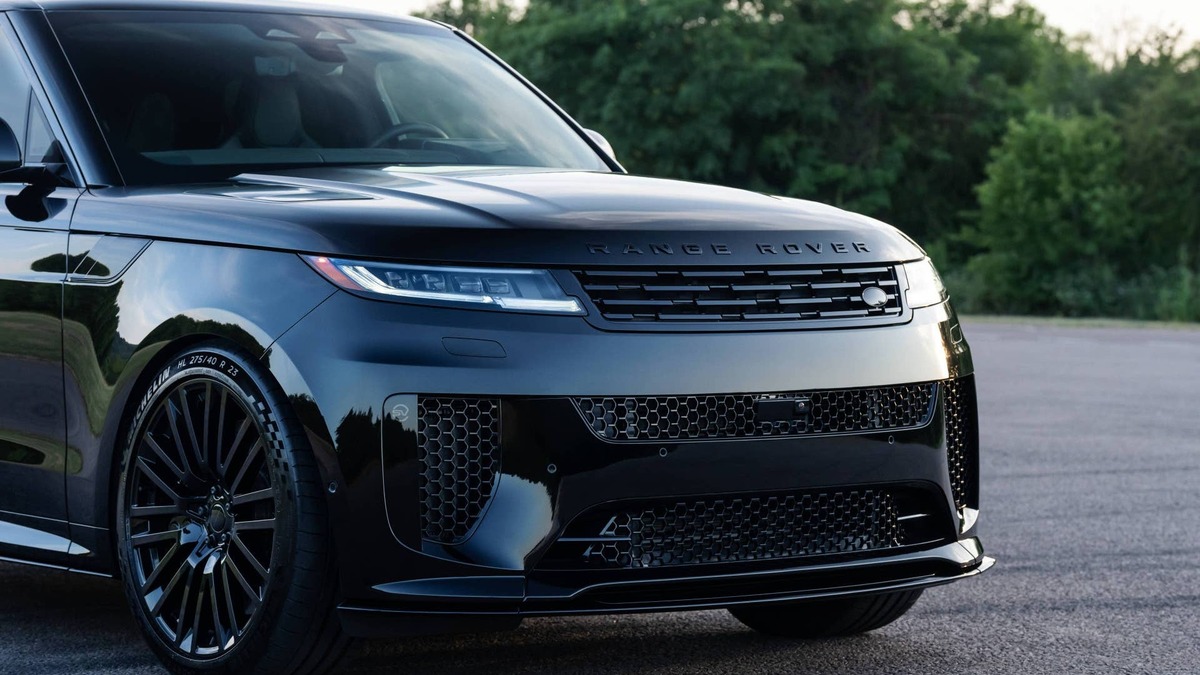
These two get shortlisted together constantly and they are not the same size of vehicle. The GLS is a full-size three-row seating seven and the Range Rover Sport a midsize two-row seating five, which should settle the comparison for anyone who counts seats first. At $85,000 the second fact matters just as much: a Range Rover Sport S opens $7,400 below the budget and the GLS 450 opens $6,600 above it. What follows is the full comparison, including the five-year figure that finishes closer than either sticker suggests.
Read more 2023 Mercedes-Maybach GLS600 for Sale With 9,000 Miles
What’s New for 2026
Mercedes keeps the GLS to two trims, the GLS 450 4MATIC at $91,600 and the GLS 580 4MATIC at $117,500. The 450 uses a 3.0-liter turbocharged inline six with EQ Boost mild-hybrid assistance producing 375 horsepower, 4MATIC all-wheel drive is standard, and seven-passenger seating comes with the body. Fuel economy is rated at 19 mpg city, 24 mpg highway and 21 mpg combined.
Land Rover restructured the Range Rover Sport lineup for 2026 into a clearer hierarchy running S, SE, Dynamic SE, Autobiography and three SV variants. The S and SE use a 3.0-liter mild-hybrid inline six producing 355 horsepower and 369 lb-ft with refined calibrations for smoother delivery, the Dynamic SE steps to 395 horsepower, the Autobiography plug-in hybrid reaches 542, and the new SV Black, SV Carbon and SV Bespoke grades top the range at 626 horsepower. Every trim seats five. The S starts at $77,600 and the SE at $83,700 before a $1,850 destination charge.
Specs and Pricing
Mercedes-Benz GLS 450 4MATIC
- Price: $91,600, with the GLS 580 4MATIC at $117,500
- Engine: 3.0-liter turbocharged inline six with EQ Boost
- Horsepower: 375 hp
- Drivetrain: 4MATIC all-wheel drive standard
- EPA city / highway / combined: 19 / 24 / 21 mpg
- Seating: 7
- Basic warranty: 4 years or 50,000 miles
- Five-year depreciation: 56.1%
- Trims: 2
Range Rover Sport SE
- Price: $83,700 plus $1,850 destination, with the S from $77,600
- Engine: 3.0-liter mild-hybrid inline six, P360
- Horsepower: 355 hp, 369 lb-ft
- Drivetrain: All-wheel drive standard on every trim
- EPA city / highway: 19 / 26 mpg
- Seating: 5 on every trim
- Towing: 7,716 lbs on most trims, 6,614 lbs on the Autobiography
- 0 to 60 mph: 5.7 sec, est. on the S P360
- Central display: 13.1-inch Pivi Pro
- Trims: 7
The budget straddles them. A Range Rover Sport S at $77,600 leaves $7,400 unspent and an SE at $85,550 all in lands $550 over, while a GLS 450 at $91,600 exceeds the figure by $6,600 before a single option. The GLS range offers two trims and the Range Rover Sport lineup offers seven, which is the wider ladder by a considerable margin.
Land Rover’s positioning against the German establishment runs the same way one rung down, where the Range Rover Sport takes on the Porsche Cayenne and comfort decides it.
Powertrains and Driving
Mercedes wins the base engine comparison narrowly. The GLS 450’s 3.0-liter inline six with EQ Boost produces 375 horsepower against the Range Rover Sport S and SE’s 355, a gap of 20, and both use mild-hybrid assistance on similar architecture.
Land Rover’s range extends considerably further. The Dynamic SE steps to 395 horsepower and 406 lb-ft, the Autobiography plug-in hybrid reaches 542 horsepower and 590 lb-ft, and the SV variants produce 626 horsepower from a 4.4-liter twin-turbocharged V8. Mercedes answers with the GLS 580 at $117,500 and nothing above it in this nameplate.
Driving character is where the Range Rover Sport draws criticism rather than praise. Independent testing describes numb feedback and soft suspension sapping most of the fun from street driving, calling it a comfortable cruiser rather than an engaging one. Few off-roaders are as comfortable, and few rivals at this money are less involving.
Towing is Land Rover’s clearest capability advantage at 7,716 lbs on most trims, with the Autobiography plug-in hybrid dropping to 6,614. Terrain Response 2 comes standard from the SE upward, which is genuine off-road hardware rather than a drive-mode selector.
Real-World Fuel Economy
Land Rover wins the highway cycle and the two tie in town, which produces a narrow combined advantage. The Range Rover Sport S and SE return 19 mpg city and 26 mpg highway, working out near 22 mpg combined. The GLS 450 returns 19 mpg city, 24 mpg highway and 21 mpg combined. City economy is identical and the entire gap sits on the highway at 2 mpg.
The Dynamic SE gives some back at 18 mpg city and 26 highway, so the efficient Range Rover Sport is the S or SE rather than the more powerful trim.
Real-world results fall short on the Land Rover. Independent testing recorded 20.2 mpg on a mixed evaluation route against a rating near 22, which testers noted as disappointing since most vehicles at least meet their combined estimates. That is worth factoring rather than dismissing. The Autobiography plug-in hybrid changes the calculation entirely for anyone who charges at home, and Mercedes offers no plug-in GLS to answer it. Both require premium fuel, so neither carries a grade penalty on top of the difference.
Design and Presence
Land Rover pioneered the modern luxury SUV shape and the current Range Rover Sport pushes it further. Creases and lines run down the front and sides and disappear quickly, door handles retract into the body, and the result is a smoothness that independent reviewers describe as almost porpoise-like. The third-generation car looks and feels more like the full-size Range Rover than any Sport before it.
Mercedes takes the more upright and traditional approach with the GLS, which is appropriate for a vehicle that has to package three rows and seven seats. It reads as substantial rather than sleek, and it is the more conventional object of the two.
Outward visibility favors the GLS, whose taller glasshouse and more upright rear window suit its packaging. The Range Rover Sport’s rakish roofline trades some of that for the shape that sells it. Presence is genuinely subjective here and it is one of the few categories where badge preference should be allowed to decide.
Cabins and Technology
Land Rover front-loads more at the entry point than the price suggests. Standard equipment on the SE includes 21-inch wheels, Windsor leather seats, 20-way heated and ventilated front seats with memory, a 13.1-inch Pivi Pro touchscreen, wireless Apple CarPlay and Android Auto, and full Terrain Response 2 capability. Higher trims add Semi-Aniline leather and 22-way massaging front seats.
The structural point is that the SE shares its chassis, Terrain Response 2 and Pivi Pro cabin with the SV sitting a few spots over on the showroom floor. What upper trims buy is power, materials and badge finish rather than fundamentals. Mercedes counters with MBUX and the material quality the brand is known for, and the GLS’s cabin has to serve three rows rather than two, which shapes the layout differently.
One consistent Range Rover Sport criticism belongs here. Owners report the absence of physical buttons and dials, with a digital interface handling everything, and it is the most common complaint from people who otherwise praise the vehicle. Mercedes retains more physical controls.
Practicality and Space
This is where the comparison is decided for a large share of buyers and it is not close. The GLS seats seven and the Range Rover Sport seats five on every trim with no three-row option at any price. For a household that needs six or seven belts, the Mercedes is the only vehicle here and no amount of Land Rover equipment changes that.
Cargo follows the same logic. A full-size three-row SUV holds more than a midsize two-row one, and the GLS’s packaging is built for carrying people and their luggage simultaneously.
Land Rover’s answer is towing and terrain. At 7,716 lbs on most trims plus standard Terrain Response 2 from the SE upward, the Range Rover Sport is the more capable vehicle away from pavement and pulling a trailer.
Rear passenger comfort favors the Range Rover Sport for its two occupants, with heated power-reclining rear seats available and 20-way front seats standard on the SE. The GLS spreads its comfort across more passengers.
A household of six or seven buys the Mercedes. A household of four or five that tows or leaves pavement buys the Land Rover.
Safety and Driver Assistance
Land Rover includes adaptive braking, blind spot monitoring, lane keeping assistance and adaptive cruise control as standard across every Range Rover Sport trim, with Meridian premium audio available.
Read more Broward and New Jersey companies recall pork that might have listeria
Mercedes equips the GLS with its comprehensive driver-assistance suite covering automatic emergency braking, blind-spot monitoring, adaptive cruise control and lane keeping assist, distributed with some of the more advanced functions in option packages.
Neither buys a decisive advantage on standard content, and both perform as expected for vehicles at this price. The practical difference is that Land Rover’s entire assistance suite arrives on the S and SE without upgrading, which matters at a budget where the Range Rover Sport fits and the GLS does not.
Resale and Cost of Ownership
Mercedes wins on the rate and the dollars finish level, which is the finding worth understanding here. The GLS surrenders 56.1% of its value across five years. Land Rover products depreciate harder, with the full-size Range Rover shedding 64%, and a Land Rover reference of 60% applied to the Range Rover Sport is a reasonable working figure.
Applied to their prices those rates nearly cancel. Applying 60% to $85,550 gives $51,330 and 56.1% to $91,600 gives $51,388, a difference of $58. Mercedes retains a better share of a higher number and Land Rover retains a worse share of a lower one, and the dollar outcomes are effectively identical.
Repair costs favor Mercedes. The brand averages $908 a year across its range, and Land Rover servicing typically runs higher, though no directly comparable model-level figure is published for the Range Rover Sport. Warranty terms match at four years or 50,000 miles on both, so neither brand buys an advantage there.
Depreciation is the largest single line in either ownership column, and the point at which the curve flattens decides whether selling at year three or holding longer is the less expensive move.
What Five Years Actually Costs
Assumes 12,000 miles a year over five years, 60,000 miles total, premium fuel at $4.00 a gallon, the GLS at its measured 56.1% depreciation, a Land Rover reference of 60% for the Range Rover Sport since no model-level figure is published, and repairs at Mercedes’ demonstrated $908 a year applied to both, which is generous to Land Rover.
Range Rover Sport SE
- Purchase price: $85,550 including destination, $550 above the budget
- Fuel over 60,000 miles at 22 mpg: $10,909
- Depreciation over five years at 60%: $51,330
- Repairs and maintenance at $908 a year: $4,540
- Five-year cost to own: $66,779
Mercedes-Benz GLS 450 4MATIC
- Purchase price: $91,600, which is $6,600 above the budget
- Fuel over 60,000 miles at 21 mpg: $11,429
- Depreciation over five years at 56.1%: $51,388
- Repairs and maintenance at $908 a year: $4,540
- Five-year cost to own: $67,357
The Range Rover Sport costs $578 less to own across five years, which is a dead heat. Depreciation finishes $58 apart in dollars despite a 3.9-point gap in the rate, because Mercedes retains a better share of a higher price. Fuel accounts for the remaining $520. Two vehicles $6,050 apart on the sticker separate by less than six hundred dollars over five years, which means ownership cost cannot decide this and the seat count has to.
Worth noting that applying Mercedes’ repair figure to both is generous to Land Rover, and a real Land Rover servicing figure would move this table toward the GLS.
Which Version to Buy
On the Land Rover side, the SE is the honest buy of the lineup and the reason is what it shares rather than what it adds. Its chassis, Terrain Response 2 and Pivi Pro cabin are the same as the SV’s, and standard equipment already includes 21-inch wheels, Windsor leather and 20-way heated and ventilated front seats. The S at $77,600 fits the budget with $7,400 to spare. The Dynamic SE adds styling and 40 horsepower rather than more standard luxury, and the Autobiography plug-in hybrid at 542 horsepower is the trim to price for anyone who charges at home.
On the Mercedes side, the GLS 450 4MATIC at $91,600 is the only trim within reach of this conversation, since the GLS 580 at $117,500 is a different budget entirely. Buyers should understand that reaching a GLS at all means exceeding $85,000 by $6,600 before options, and Mercedes offers no lower trim.
The honest guidance at exactly $85,000 is that the Range Rover Sport fits and the GLS does not, and that the seat count is the question worth answering before the budget one.
Scorecard
- Design and presence: Range Rover Sport. Retracting door handles and a smoothness reviewers call almost porpoise-like
- Cabins and technology: Range Rover Sport. Windsor leather and 20-way heated and ventilated front seats standard on the SE
- Powertrains and driving: GLS. 375 hp against 355, and the Range Rover Sport draws criticism for numb feedback
- Practicality and space: GLS. Seven seats against five, with no three-row Range Rover Sport at any price
- Real-world fuel economy: Range Rover Sport. 26 mpg highway against 24, though it returned 20.2 mpg in testing
- Capability: Range Rover Sport. 7,716 lbs of towing and standard Terrain Response 2 from the SE
- Resale and cost of ownership: Draw. $578 apart across five years, and depreciation finishes $58 apart in dollars
Range Rover Sport 4, GLS 2, one draw.
So Which Makes a Stronger Case for $85,000?
The Range Rover Sport, and the budget is the reason before anything else. An S opens at $77,600 with $7,400 to spare and an SE lands $550 over at $85,550 including destination, while the GLS 450 exceeds the figure by $6,600 before a single option and Mercedes offers nothing below it. A buyer holding to $85,000 has one vehicle to choose from.
Ownership cost cannot break the tie because it finishes level. Depreciation lands $58 apart in dollars, fuel contributes $520, and the five-year totals separate by $578, which is inside any meaningful margin on vehicles at this price. That is unusual and it means the decision rests entirely on what each vehicle does.
What the Land Rover does is tow 7,716 lbs, carry standard Terrain Response 2 from the SE upward, return 26 mpg on the highway against 24, and arrive with 21-inch wheels, Windsor leather and 20-way heated and ventilated front seats included. Its SE shares a chassis and cabin with the SV sitting a few spots away on the showroom floor.
Mercedes wins the category that will decide it for a great many buyers. The GLS seats seven and the Range Rover Sport seats five on every trim, so a household needing six or seven belts has exactly one option here regardless of budget. The GLS also makes 20 more horsepower at the base and retains a better share of its value.
Three buyer profiles should take the GLS. Anyone who needs more than five seats, because no Range Rover Sport offers a third row at any price. Anyone whose budget extends comfortably past $91,600, since the Mercedes becomes a genuine choice rather than an overshoot. And anyone who wants physical controls, because the absence of buttons and dials is the most consistent Range Rover Sport complaint from owners who otherwise praise it.
Take the Mercedes-Benz GLS for seven seats and 20 more horsepower, if you can find $6,600 beyond the budget. Take the Range Rover Sport because it fits $85,000, tows 7,716 lbs and costs the same to own.
Alternatives to Consider
The BMW X7 offers three rows and a 375-horsepower inline six at a price between these two. The Cadillac Escalade seats eight with a 6.2-liter V8 and a 55-inch display for comparable money. The Lincoln Navigator makes 440 horsepower with all-wheel drive standard and tows 8,700 lbs. And the Land Rover Range Rover steps up to the full-size car for buyers who want the badge with more space, at considerably higher cost.
Frequently Asked Questions
Which fits an $85,000 budget?
Only the Range Rover Sport. The S opens at $77,600 and the SE at $85,550 including destination, while the GLS 450 starts at $91,600.
Which seats more people?
The GLS, with seven seats against five. No Range Rover Sport trim offers a third row at any price, which makes the Mercedes the only option for larger households.
Which is more fuel efficient?
The Range Rover Sport narrowly, at 26 mpg highway against 24 with city economy tied at 19. Testing recorded 20.2 mpg on a mixed route.
Which costs less to own?
Effectively neither. The Range Rover Sport finishes $578 ahead across five years, with depreciation landing just $58 apart in dollars.
Read more A South Carolina death row inmate died of illness, prison officials say
Copyright 2026 The Arena Group, Inc. All Rights Reserved