 By admin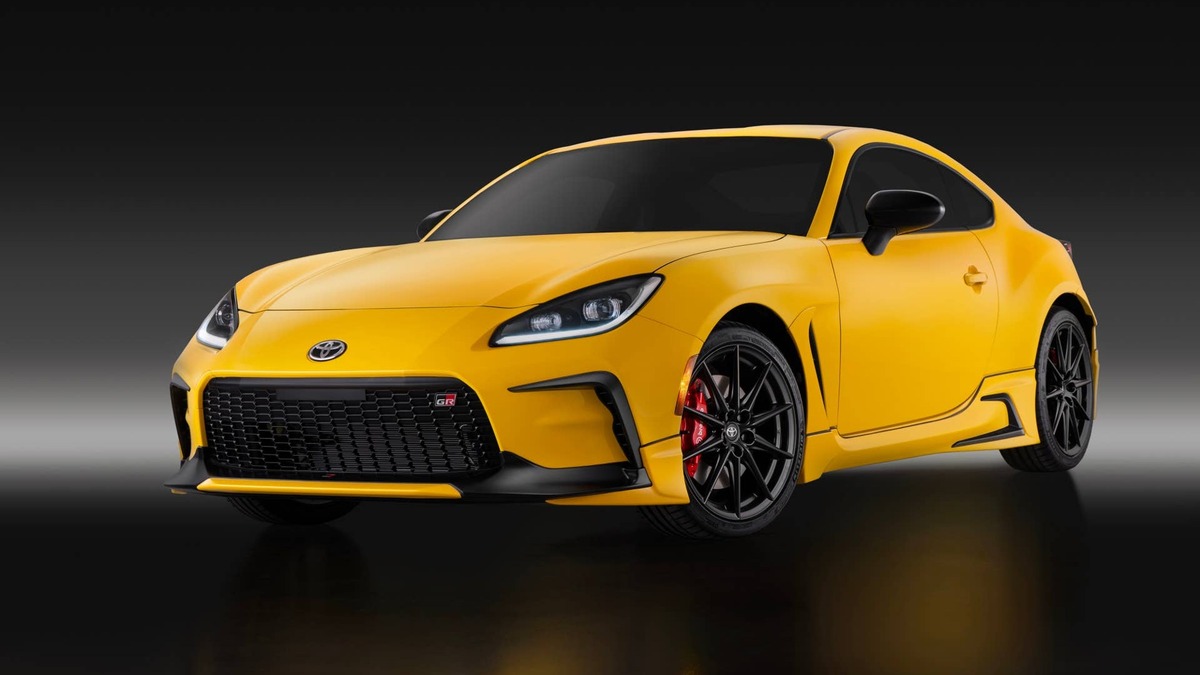
These two share an engine family and almost nothing else, which is what makes the comparison interesting. Subaru builds a 271-horsepower all-wheel-drive sedan you can use every day in any weather, and Toyota builds a 228-horsepower rear-drive coupe that weighs less and holds almost nothing. Both return exactly 22 mpg combined, so fuel settles nothing, and the figure that separates them across five years is one most buyers never check.
Read more Fake signatures found on forms to keep inmates in jail for ICE, NC sheriff says
What’s New for 2026
Toyota prices the GR86 from $31,400 with a 2.4-liter naturally aspirated boxer four producing 228 horsepower and 184 lb-ft at 3,700 rpm. A six-speed manual and a six-speed automatic are both offered across a wide trim ladder including base, Premium and the Yuzu Edition, and the manual reaches 60 mph in near 6.1 seconds against 6.6 for the automatic. Drive goes to the rear wheels only, and the car measures 167.9 inches long and 51.0 inches tall.
Subaru prices the WRX from $32,495 with a 2.4-liter turbocharged boxer four producing 271 horsepower and 258 lb-ft from 2,000 rpm. Symmetrical all-wheel drive is standard, the range spans base, Premium, Limited, GT, tS and Series.Yellow across manual and CVT transmissions, and an 11.6-inch display anchors the cabin. The four-door body measures 183.8 inches long and 57.0 inches tall.
Specs and Pricing
Toyota GR86
- Price: From $31,400, with the range reaching $39,514
- Engine: 2.4-liter naturally aspirated boxer four, 228 hp, 184 lb-ft at 3,700 rpm
- Transmissions: 6-speed manual or 6-speed automatic
- Drivetrain: Rear-wheel drive
- EPA city / highway / combined: 20 / 26 / 22 mpg
- 0 to 60 mph: 6.1 sec, est. with the manual, 6.6 with the automatic
- Cargo: 6.3 cu ft
- Seating: 4
- Dimensions: 167.9 in long, 69.9 in wide, 51.0 in tall
- Central display: 8 inches
- Five-year depreciation: 24.9%
Subaru WRX
- Price: From $32,495, with the range reaching $50,192
- Engine: 2.4-liter turbocharged boxer four, 271 hp, 258 lb-ft from 2,000 rpm
- Transmissions: 6-speed manual or CVT depending on trim
- Drivetrain: Symmetrical all-wheel drive standard
- EPA city / highway / combined: 19 / 26 / 22 mpg
- Cargo: 12.5 cu ft
- Body: 4-door sedan
- Dimensions: 183.8 in long, 71.9 in wide, 57.0 in tall
- Central display: 11.6 inches
- Five-year depreciation: 35.3%
Both use 2.4-liter boxer fours and both want premium fuel, so the mechanical families are related even where the execution is not. The GR86 range runs rear-wheel drive across every trim, and the WRX lineup fits symmetrical all-wheel drive to all of them.
Toyota’s rear-drive approach puts it in a segment that keeps shrinking, where the Mustang GT is one of the last naturally aspirated V8s with a manual. That scarcity turns up again in the resale figures below, which is not a coincidence.
Powertrains and Driving
Subaru wins output comfortably and the margin is larger in torque than in horsepower. The WRX produces 271 horsepower and 258 lb-ft against the GR86’s 228 and 184, gaps of 43 and 74 respectively, and Subaru’s peak arrives from 2,000 rpm where Toyota’s waits until 3,700. That difference in delivery is felt constantly rather than only at full throttle, and it is what makes the WRX the easier car to drive quickly without working for it.
Toyota’s answer is what the engine does not have to overcome. The GR86 is 15.9 inches shorter, 2.0 inches narrower and 6.0 inches lower than the WRX, and it drives only the rear wheels rather than all four. Less mass, a lower center of gravity and no front driveshafts produce a car that changes direction more eagerly than its power figure suggests, which is the entire design brief.
Transmission choice separates them in an unexpected way. Toyota offers a six-speed manual and a six-speed automatic across the range, and Subaru pairs its manual with some trims and a CVT with others including the GT. For a buyer who wants three pedals, both deliver, and for a buyer who wants a conventional automatic rather than a CVT, only Toyota does.
Real-World Fuel Economy
Both return 22 mpg combined, which removes fuel from the comparison entirely. The GR86 is rated at 20 mpg city and 26 highway, and the WRX at 19 and 26, so Toyota wins the city cycle by 1 mpg and the highway ties. Over 60,000 miles both consume 2,727 gallons and cost $10,909 at $4.00 a gallon, a difference of zero.
That result is more surprising than it looks on paper. Subaru is moving a heavier four-door sedan through all four wheels with a turbocharger, and Toyota is moving a lighter two-door coupe through two wheels without one, and the two arrive at the same number. Forced induction buys the WRX its power without costing it fuel relative to the naturally aspirated car.
Both want premium fuel, with Subaru recommending it and Toyota requiring it, so neither carries a grade advantage over the other. A buyer choosing on running costs at the pump is choosing between two identical columns, which pushes the whole ownership question onto depreciation.
Design and Presence
Toyota built a low, compact coupe and Subaru built a rally-derived sedan, and the shapes tell you exactly what each is for. At 51.0 inches tall the GR86 sits 6.0 inches lower than the WRX and looks it, with proportions that read as a proper sports car rather than a fast version of something ordinary.
Subaru’s WRX carries the visual language its rally history earned, with the hood scoop, the wide stance and the four-door practicality that made the nameplate what it is. It is 183.8 inches long against the GR86’s 167.9, which makes it the considerably larger object in a parking space.
Neither is subtle and both draw attention, though from different audiences. Owner sentiment is strong for both, with the GR86 rated 4.92 out of 5 by buyers and the WRX 4.85, which is unusually high for any vehicle and reflects two cars delivering what their buyers wanted.
Cabins and Technology
Subaru fits the larger screen and the more usable cabin. The WRX’s 11.6-inch display dwarfs the GR86’s 8-inch unit, and independent assessment gives Subaru the advantage on interior volume across the board. Four doors rather than two is the structural difference, and it changes daily usability more than any feature list.
Toyota’s cabin is built for the driver and makes no apology for what it gives up. The GR86 seats four in theory, with rear seats that function as padded storage more than as accommodation, and the low seating position and compact dimensions serve the driving experience rather than the passengers.
Standard equipment is closely matched at the entry point. Both fit cloth seats, six-speaker audio systems and LED headlamps as standard, so the difference at the base trim is screen size and doors rather than content.
Practicality and Space
Subaru wins this section outright and the margin is close to double. The WRX holds 12.5 cubic feet of cargo against the GR86’s 6.3, a difference of 6.2 cubic feet, and its four-door body allows rear passengers to get in and out without folding a front seat forward.
All-weather capability is the larger advantage. Symmetrical all-wheel drive is standard on every WRX and the GR86 drives only its rear wheels, which for a buyer in a snow state is the difference between a year-round car and a seasonal one. That single specification removes the Toyota from consideration for a meaningful share of shoppers.
Toyota’s counter is that practicality was never the point. A 6.3-cubic-foot trunk and token rear seats are the cost of a car 6.0 inches lower and considerably lighter, and a buyer choosing the GR86 is accepting those limits deliberately rather than discovering them later.
Safety and Driver Assistance
Both fit comprehensive standard driver-assistance content appropriate to their price and segment, and neither is short on equipment. Subaru’s EyeSight suite and Toyota’s Safety Sense arrangement cover automatic emergency braking, lane keeping and adaptive cruise control on the configurations that support them.
All-wheel drive belongs in this section as well as the practicality one. Traction in poor conditions affects outcomes in ways no laboratory test measures, and only the WRX offers it, which is a genuine safety-adjacent advantage in a cold or wet climate.
Read more Driver killed when vehicle runs off I-20 and crashes, South Carolina cops say
Neither vehicle has a safety record that should concern a buyer, and neither buys a decisive advantage on published crash results. The choice between them should not rest here.
Resale and Cost of Ownership
This is where the comparison turns and the figure is remarkable. The GR86 surrenders 24.9% of its value across five years and the WRX 35.3%, so Toyota retains 10.4 points more. That 24.9% is among the strongest retention figures we have measured on any vehicle in any segment, and it reflects demand for a rear-drive manual coupe that the market increasingly cannot get elsewhere.
Applied to their entry prices the WRX sheds $11,471 and the GR86 $7,819, a difference of $3,652 despite the Toyota already costing $1,095 less to buy. The two effects compound rather than offsetting, which is the opposite of the usual pattern where a cheaper car sheds a higher percentage.
Independent assessment reaches the same conclusion, giving the GR86 the advantage on new vehicle base pricing, used pricing for one to five-year-old examples and resale value, while the WRX leads on interior volume and base engine power. Fuel contributes nothing to the comparison, since both return 22 mpg combined and use the same premium grade.
Depreciation is the largest single line in either ownership column, and the point at which the curve flattens decides whether selling at year three or holding longer is the less expensive move. On a car retaining 75.1% after five years, holding longer costs less than it would on almost anything else.
What Five Years Actually Costs
Assumes 12,000 miles a year over five years, 60,000 miles total, premium fuel at $4.00 a gallon, and base trims on both. Repairs are set at a sports car reference of $500 a year and applied equally, since neither publishes a directly comparable model-level figure.
Toyota GR86
- Purchase price: $31,400
- Fuel over 60,000 miles at 22 mpg: $10,909
- Depreciation over five years at 24.9%: $7,819
- Repairs and maintenance at $500 a year: $2,500
- Five-year cost to own: $21,228
Subaru WRX
- Purchase price: $32,495
- Fuel over 60,000 miles at 22 mpg: $10,909
- Depreciation over five years at 35.3%: $11,471
- Repairs and maintenance at $500 a year: $2,500
- Five-year cost to own: $24,880
The GR86 costs $3,652 less to own across five years and $1,095 less to buy. Fuel is identical at $10,909 each and repairs are treated as equal, so depreciation does the entire job at 24.9% against 35.3%. That gap is more than three times the purchase difference, and the GR86’s retention figure is strong enough to make it one of the least expensive performance cars to own at any price.
Which Version to Buy
On the Toyota side, the six-speed manual is the version that matters and it reaches 60 mph half a second quicker than the automatic at near 6.1 seconds. The six-speed automatic is a conventional torque-converter unit rather than a CVT, which makes it the better automatic in this comparison for anyone who does not want three pedals. The Yuzu Edition and Premium trims add equipment without changing the mechanical package.
On the Subaru side, trim determines transmission and that decision matters. The manual is available on base, Premium, Limited, tS and Series.Yellow, and the Limited and GT use a CVT, so a buyer who wants to shift should check the specific trim before ordering. The tS adds chassis hardware for buyers who want the sharpest WRX.
Anyone who needs all-weather capability is shopping the WRX regardless of trim, since Toyota offers no all-wheel-drive GR86 at any price. That decision is made before any other specification is considered.
Scorecard
- Design and presence: GR86. A genuine coupe 6.0 inches lower and 15.9 inches shorter, with a 4.92 out of 5 owner rating against 4.85
- Cabins and technology: WRX. An 11.6-inch display against 8 inches, plus more interior volume and two extra doors
- Powertrains and driving: WRX. 271 hp and 258 lb-ft from 2,000 rpm against 228 and 184 from 3,700
- Practicality and space: WRX. 12.5 cubic feet of cargo against 6.3, close to double
- Real-world fuel economy: Draw. Both return 22 mpg combined on premium fuel
- Capability: WRX. Symmetrical all-wheel drive standard where the GR86 drives only its rear wheels
- Resale and cost of ownership: GR86. $3,652 less across five years, and 24.9% depreciation against 35.3%
WRX 4, GR86 2, one draw.
So Which Comes Out Ahead?
The GR86, and the scorecard goes the other way, which is worth stating rather than adjusting. Subaru wins power, practicality, cabin technology and all-weather capability, and those are four real advantages that matter to most buyers most days.
Ownership decides it and the margin is unusually wide for two cars priced $1,095 apart. The GR86 costs $3,652 less across five years because it sheds 24.9% of its value against the WRX’s 35.3%, and that 24.9% figure is among the strongest retention numbers we have measured on any vehicle. Fuel contributes nothing, since both return 22 mpg combined on premium, so depreciation does the entire job. Independent assessment reaches the same verdict, rating the GR86 the better overall car on base pricing, used pricing and resale value.
What the market is paying for is scarcity. A rear-wheel-drive coupe with a six-speed manual and a naturally aspirated engine is close to unavailable at this price, and that shortage is what holds the GR86’s value where the WRX’s slips.
Subaru’s case is genuine and it rests on using the car. Two hundred seventy-one horsepower and 258 lb-ft from 2,000 rpm against 228 and 184 from 3,700 makes the WRX quicker and easier to drive quickly, 12.5 cubic feet of cargo against 6.3 is close to double, four doors beat two for anyone carrying passengers, and symmetrical all-wheel drive is standard where Toyota offers none.
Three buyer profiles should take the WRX. Anyone in a snow state, since all-wheel drive is standard on every WRX and unavailable on any GR86, and no amount of resale advantage helps a rear-drive coupe in February. Anyone using the car as their only vehicle, because 6.2 more cubic feet and two more doors change what is possible on an ordinary week. And anyone who wants the power, since 43 horsepower and 74 lb-ft is a gap the GR86 cannot close.
Take the Subaru WRX for all-wheel drive, more power and a car you can genuinely use every day. Take the Toyota GR86 for a lighter, lower coupe that costs $3,652 less to own and holds its value better than almost anything on sale.
Alternatives to Consider
The Subaru BRZ is the GR86’s twin with different suspension tuning and the same rear-drive layout. The Honda Civic Type R delivers 315 horsepower through the front wheels with a standard manual. The Mazda MX-5 Miata trades power entirely for the purest manual experience left at any price. And the Volkswagen Golf GTI offers hatchback practicality with a standard manual and comparable output.
Frequently Asked Questions
Which is more affordable?
The GR86, by $1,095 at $31,400 against $32,495. Across five years it costs $3,652 less to own because it sheds 24.9% of its value against 35.3%.
Which is more powerful?
The WRX, with 271 hp and 258 lb-ft against the GR86’s 228 and 184. Subaru’s torque peak also arrives at 2,000 rpm against Toyota’s 3,700.
Which is more fuel efficient?
Neither. Both return 22 mpg combined and both want premium fuel, so the five-year fuel cost is identical at $10,909.
Which is more practical?
The WRX, with 12.5 cubic feet of cargo against 6.3, four doors against two and standard symmetrical all-wheel drive the GR86 does not offer.
Read more Trump says he’ll consider whether to release more 9/11 records
Copyright 2026 The Arena Group, Inc. All Rights Reserved